A hill in the Central Apennines, at the foot of which is the town of Cassino. The name comes from the Roman ‘cassa’ meaning house, shelter.
Its strategic location meant that the hill repeatedly became the target of armies traversing the Italian peninsula. From the 5th century BC, the top of the hill was home to an encampment of Roman legions, and there were temples in honour of Jupiter, Phoebus and Venus. In the 6th century AD, a Benedictine monastery was founded on top of the hill, where St Benedict wrote the rule of the order. Shortly afterwards, the monastery was demolished by the Lombards and the monks were expelled. They returned after almost two hundred years and by mid-9th century had brought the abbey to prosperity. The subsequent destruction of the monastery and expulsion of the monks was the work of the Saracens.
The Benedictines returned to Monte Cassino again in the 10th century and once again set about rebuilding the monastery. The development of the abbey was disrupted in 1349 when some of the buildings were destroyed by an earthquake. Reconstruction and development of the monastery continued until the end of the 18th century, and in 1799 it was captured by Napoleon Bonaparte’s army. After the unification of Italy in 1866, the monastery was declared a national monument.
During the Second World War, the monastery was located in the line of fortifications of the so-called Gustav Line. The building itself was not fortified and no German troops were stationed there. In the first stage of the fighting to break through the German fortifications, which lasted from 17 January to the end of February 1944, the monastery was in the combat area and was slightly damaged. The Allied command, in preparation for further attacks on the Gustav Line, recognised that the monastery could be occupied by the Germans and used as a fortress. The decision was taken to bomb it, which was made public. The monks were given three days to remove the book collection and artefacts to a safe place.
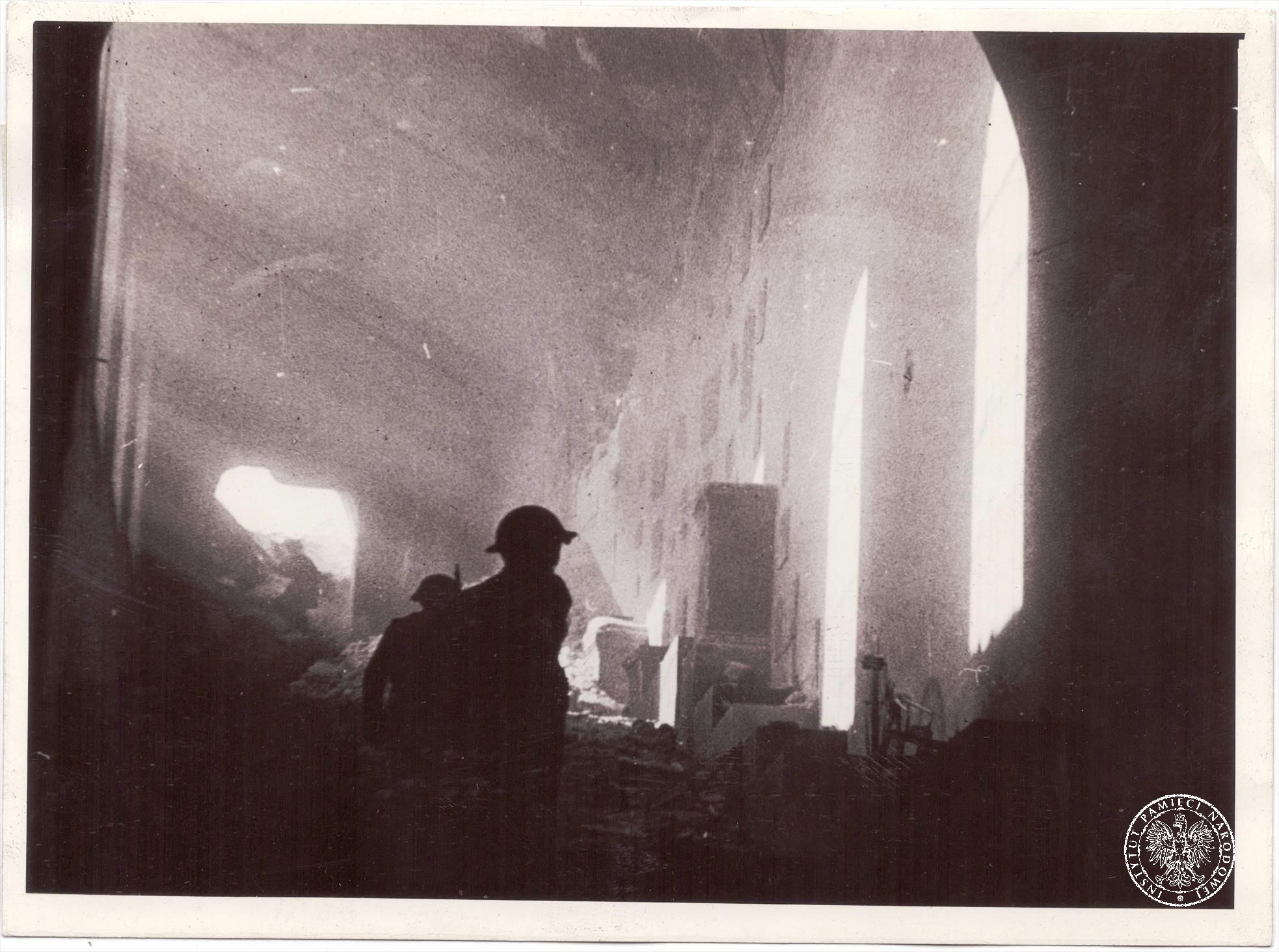
The three-day bombardment, which began on 15 February 1944, led to the complete destruction of the monastery buildings. Only the crypts of St Benedict and St Scholastica survived. The ruins were occupied by the Germans, who used them to repel Allied attacks on the Gustav Line. They created a strongly defended point there, and, without capturing it, the Allies had a very difficult offensive towards Rome.
The infantry and tank attacks, which began in parallel with the bombardment, did not result in the capture of Cassino or the monastery. On 15 March another assault on the town was launched, combined with heavy bombardment and artillery fire. The New Zealanders took much of the town and the surrounding hills, but on 25 March the momentum of the attack collapsed and the troops returned to their starting positions. The Allies lost 48,000 troops and failed to break the Gustav Line.
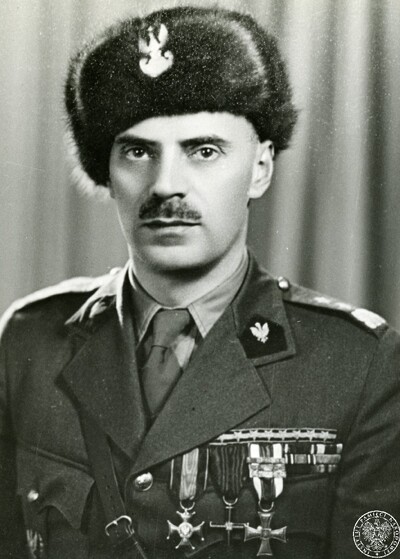
On 24 March, General Władysław Anders received a proposal for the 2nd Polish Corps to carry out an attack on Monte Cassino. He accepted this proposal because he believed that in this way he would contradict the Soviet propaganda accusing Poles of avoiding the fight against the Germans. He assumed that:
If we conquered Monte Cassino, and we had to conquer it, we would bring the Polish cause - then so mistreated - to the very centre of the world’s attention.
In April, planning began for the attack, which was to be an element of a wide-ranging attack on the line of German fortifications. The first Polish attack was launched on the night of 12 May. Hills ‘593’ and ‘569’ were attacked, however, the well-prepared German fortifications proved impenetrable and the Poles returned to their starting positions with heavy losses.
The next attack began in mid-May. It was preceded by several days of bombardment and artillery shelling. On 16 May, the Poles captured the famous ‘Spectre’ and hills ‘593’ and ‘569’. The following day, the Poles extended the captured areas to include the hills of ‘Monte Castellone’ and ‘Massa Albaneta’. The German defence was broken through and Colle San Angelo was captured. At the same time, Allied troops made advances on other sections of the front. Fearing encirclement, on the night of 17/18 May 1944, the Germans left the monastery.
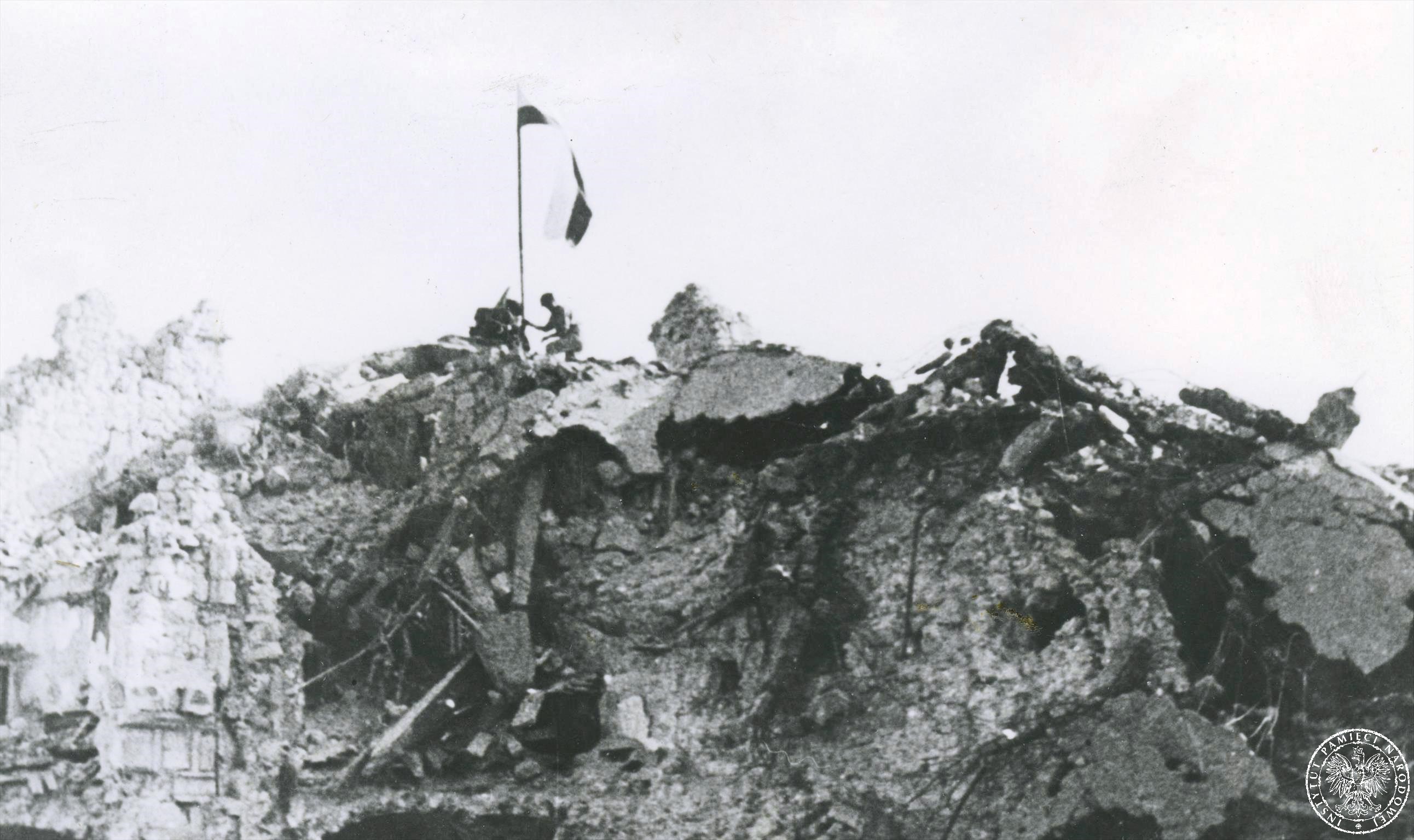
On 18 May, a patrol of the 12th Regiment of the Podolian Lancers under the command of 2nd Lt. Kazimierz Gurbiel entered the ruins of the monastery. First the pennant of the 12th Regiment of the Podolian Lancers was hoisted on its walls, then the Polish flag. At noon, on the ruins of the Monte Cassino monastery, master corporal Emil Czech played St. Mary’s bugle call.
In the following days, those that survived from the German troops were removed from the vicinity of the monastery, and several villages were liberated. The road to Rome was open.
The allies spoke very highly of the attitude of Polish soldiers. General Alexander, commanding the 15th Army Group, during the decoration of General Anders with the Order of the Bath, said:
It was a day of great glory for Poland when you conquered this fortress, which the Germans themselves considered impossible to conquer [...]. Soldiers of the 2nd Polish Corps! If I were given a choice between any soldiers I wanted to have under my command, I would choose you, Poles.
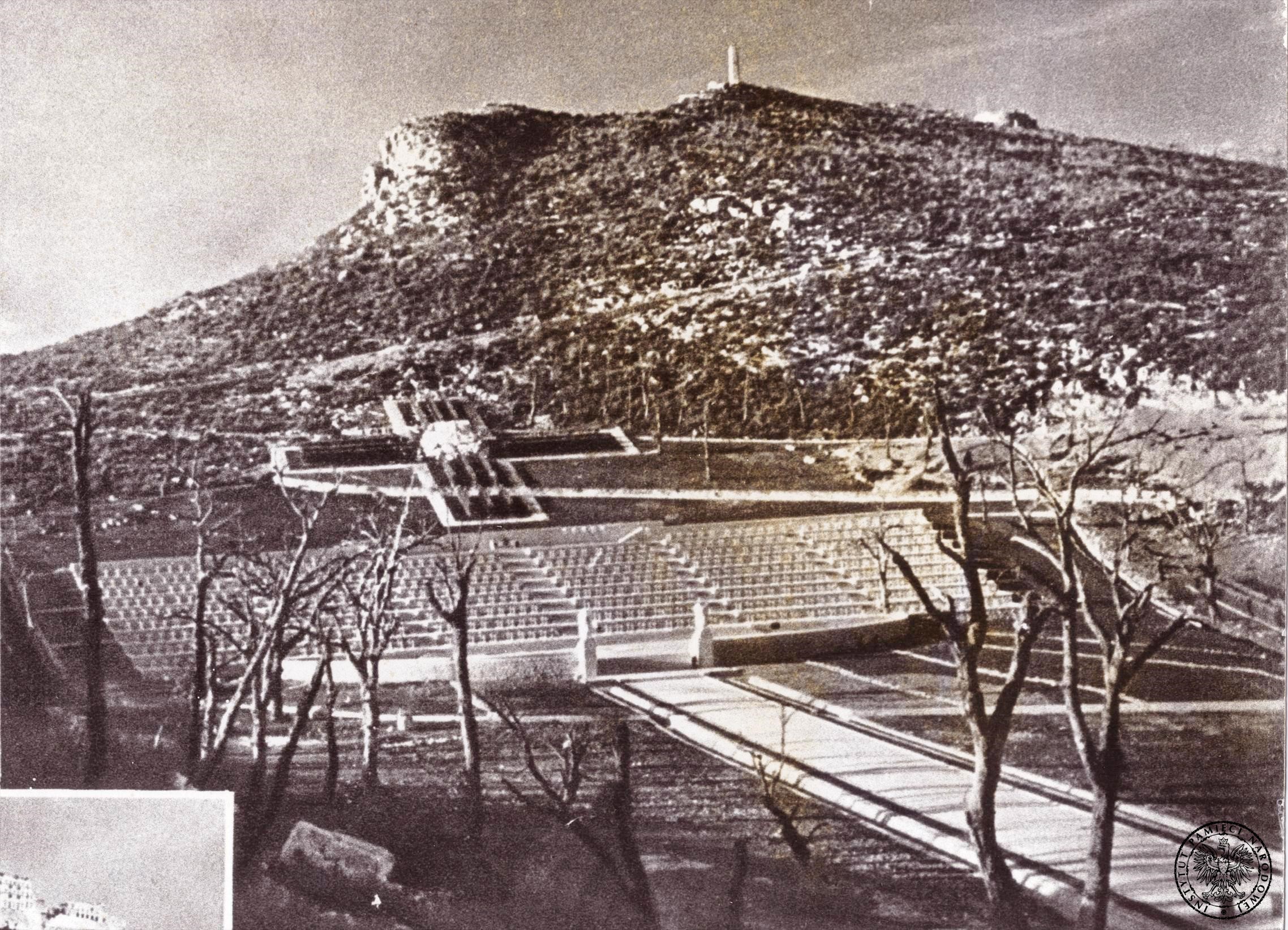
In 13 days and 20 hours of fighting, the 2nd Polish Corps suffered heavy losses. 923 Polish soldiers were killed, 2931 were wounded and 345 were reported missing. In late 1944 and early 1945, a Polish war cemetery was erected on the hillside between Monte Cassino and Hill ‘593’. The project was designed by architects Wacław Hryniewicz and Jerzy Skolimowski. Currently, 1,072 soldiers of the 2nd Polish Corps are buried there, including General Władysław Anders.
The battle also became a legend in the song “Red Poppies on Monte Cassino”, which Feliks Konarski wrote the night before the last assault:
Red poppies on Monte Cassino
Instead of dew, they drank Polish blood.
Soldiers walked on these poppies and died,
But stronger than death was their wrath.
Years go by and centuries will pass,
But traces of old days will last.
And all the poppies on Monte Cassino
Will be redder than Polish blood.
After the end of hostilities, the reconstruction of the monastery began, with its reconsecration taking place in 1964.