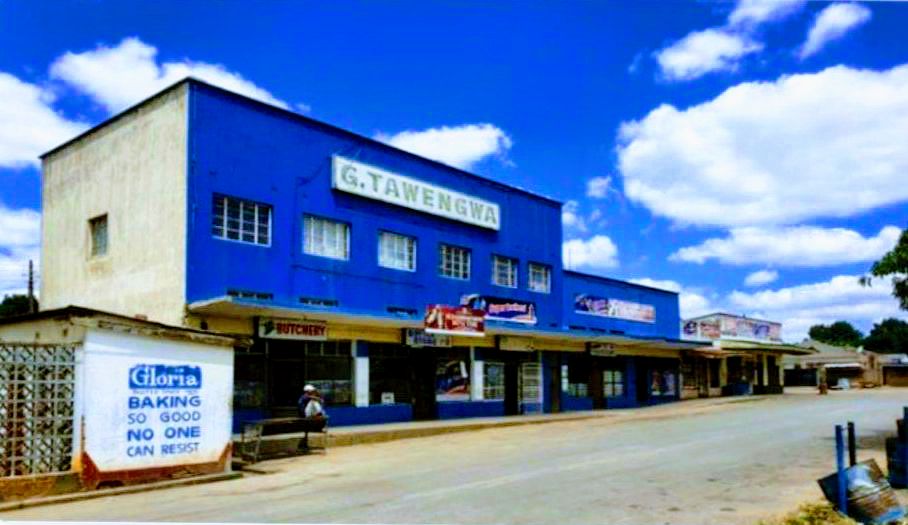
The town was originally called Kraal Marandelli, it was located in the territory of the VaRozvi people. The British, having occupied Africa, made it a stopover on their way to Harare.
After its destruction in 1896, the town was moved 4 miles (6 km) north to the Beira - Bulawayo railway line. During the Boer Wars, British Army troops were stationed here, using it as a starting point to Transvaal.
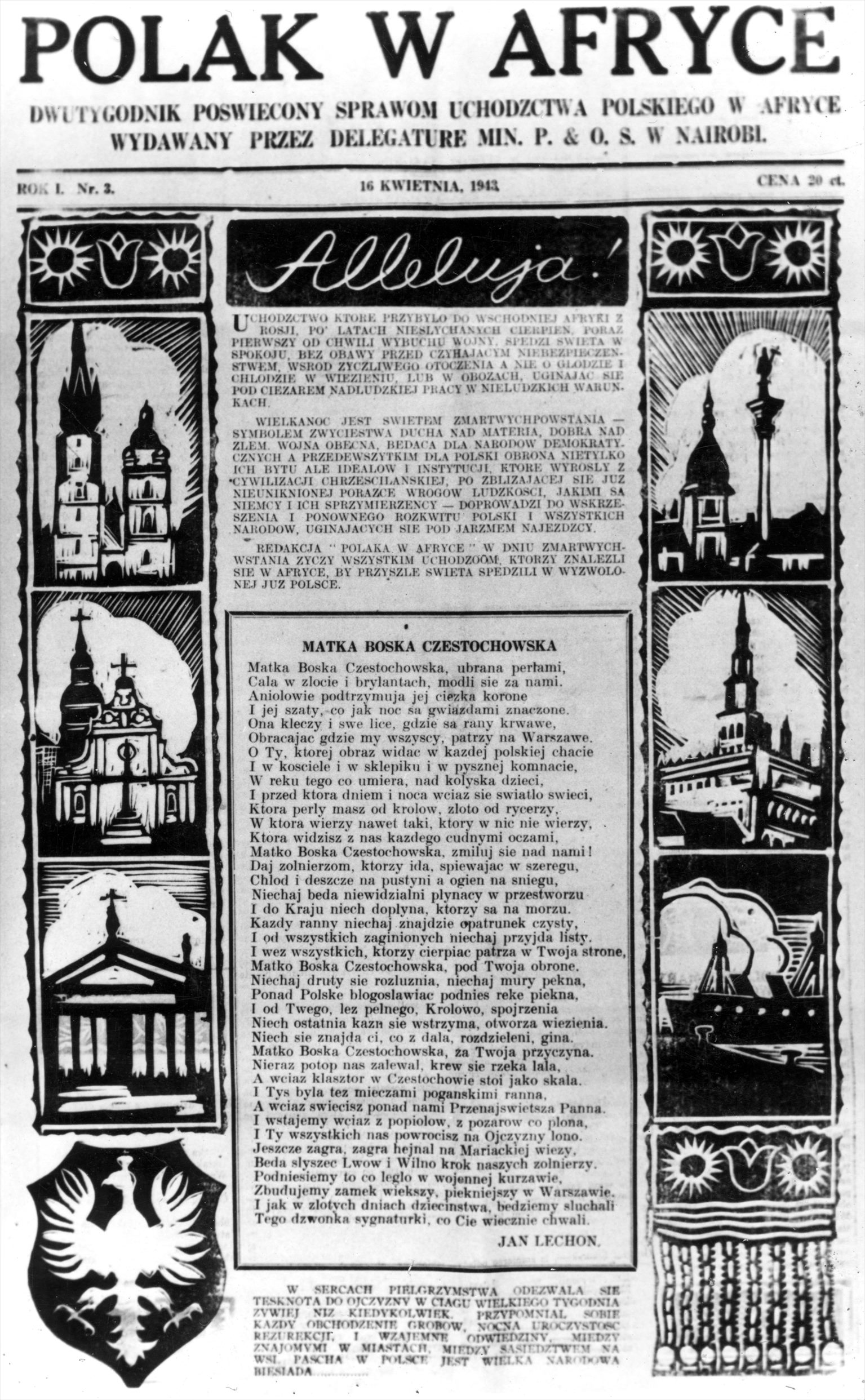
During the Second World War, the town was called Marondellas; now, it is Marondera. The British authorities in Southern Rhodesia offered to create a settlement here for the Polish population evacuated by the Anders Army from the USSR. Under-Secretary of State in the Rhodesian government T.C. Fynn informed his superiors that the buildings in Marandellas would be ready to receive the Poles on 20 December 1942. The first transport of Poles to Africa arrived at the port of Beira on 14 February 1943 and was directed to Marandellas.
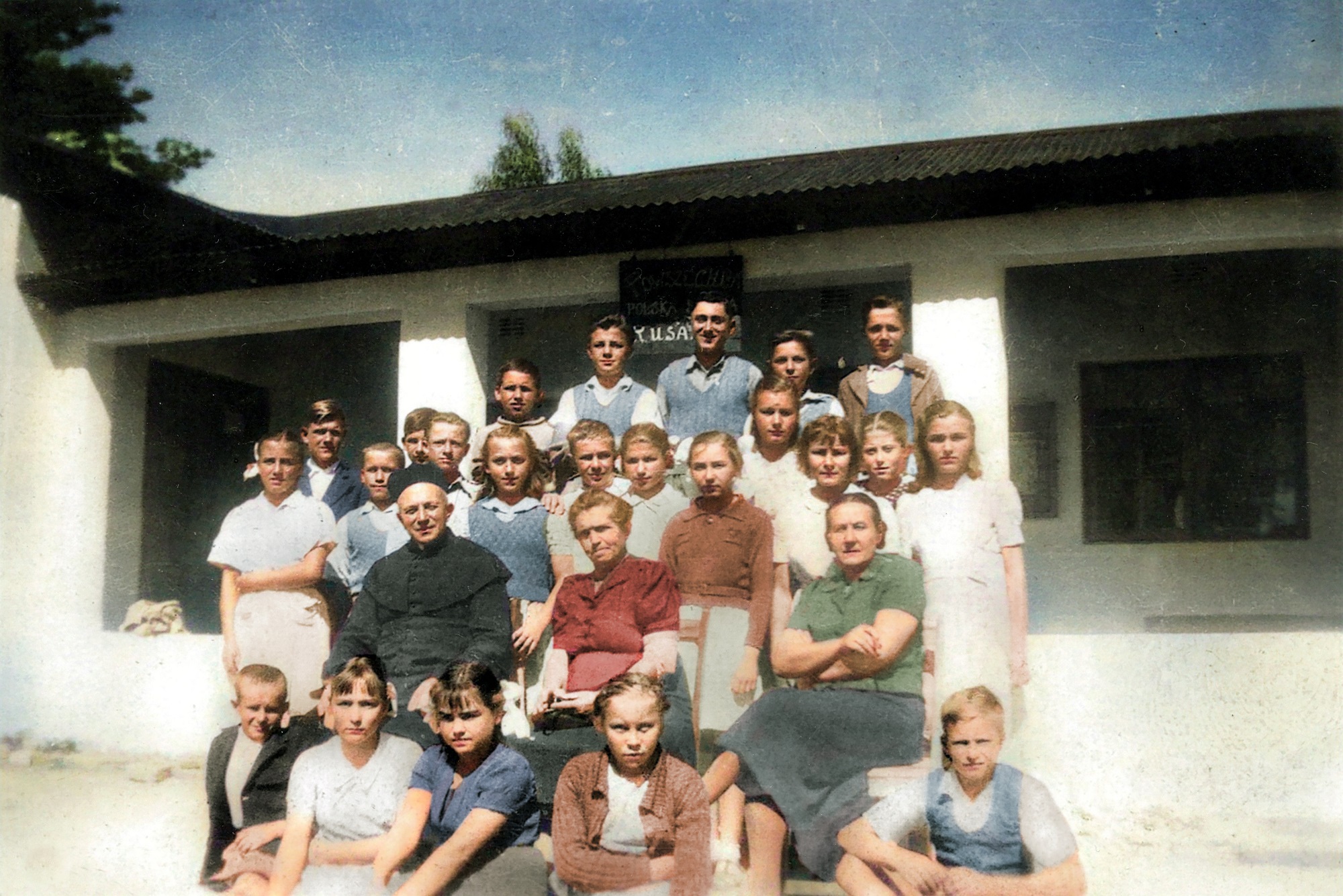
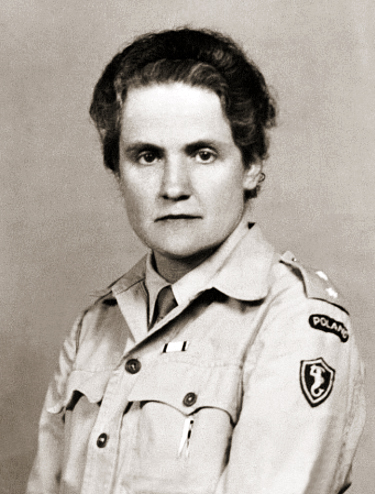
A Polish settlement called “Little Poland” was established there, which was inhabited by 622 Poles. The Poles organised two canteens, a kitchen, bathrooms, a laundry and a small hospital. There was also a Polish House, which housed a community centre, a library, an auditorium and workshops - tailoring and shoemaking - and a hairdresser. A Polish scouting organisation was also opened here. The residents also used the farmland belonging to the camp.
In the Marondellas camp, children made up 48.5 per cent of the population, and initially had no conditions for education there. School activities took place in the dining room during the breaks between meals. Therefore, a girls’ lower secondary school and secondary school were built in nearby Digglefold in 1943 so that they could continue their school education. The school was established on the initiative of General Ferdynand Zarzycki, a pre-war independence activist and teacher in Nowy Targ, Minister of Industry and senator of the Second Polish Republic. The teachers were Poles evacuated from Cyprus; they included university professors. In its first year, the school had 145 female students, for whom grammar school courses were provided. Thanks to the commitment of the teaching staff, educational and cultural activities were quickly developed. In January 1944, a group of 50 children from Marandellas and Digglefold prepared a nativity play in Salisbury.
The settlement in Marandellas was liquidated at the end of 1946, but a cemetery with graves of nine Poles remained there. The building of the girls’ lower secondary school and secondary school built by Poles in Digglefold has also been preserved to this day. A stone Polish eagle is still visible in front of the entrance, and the school’s archives hold a Polish emblem embroidered by Polish schoolgirls.