The first contacts between Poland and Cyprus date back to the Middle Ages, and were connected with Polish pilgrimages to the Holy Land. there are mentions of Polish pilgrims dating from the 15th century.
During World War II, Cyprus, which was a British colony at that time, became one of the stops for Polish refugees who got out of internment camps in Hungary and Romania. Taking advantage of the positive attitude of the Hungarian and Romanian authorities, a group of about 500 people left the internment camps in those countries in September 1940. Having received an invitation from King George VI of Great Britain, they were given the opportunity to live in Cyprus. This group included intellectuals, representatives of the Polish Government, local authorities and insurgents from Silesia and Greater Poland. The writer Melchior Wańkowicz was also among them and he described the Poles’ stay in Cyprus.
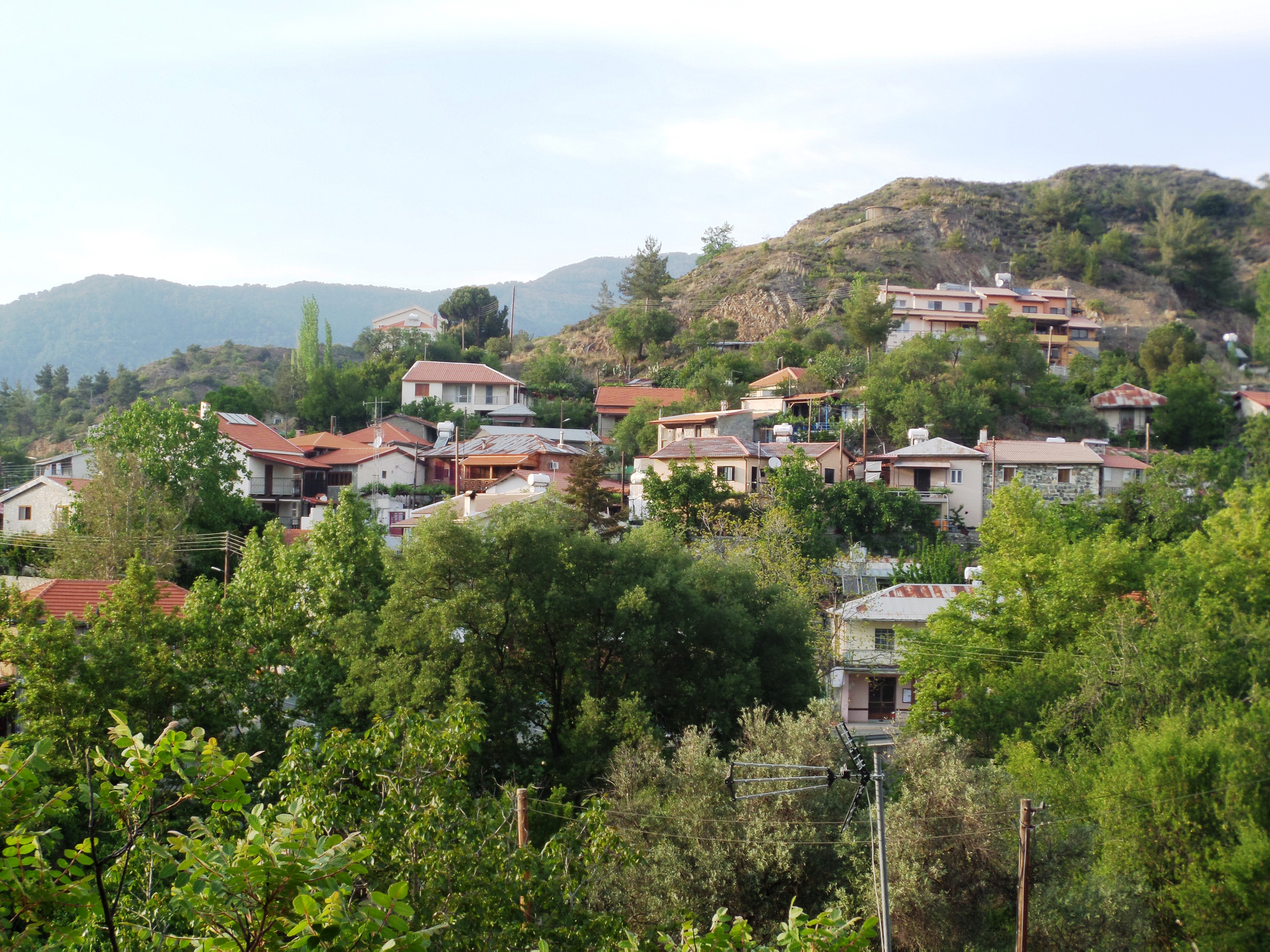
The refugees lived in the Helvetia, Grand and Forest hotels in Platres and they were looked after by the Polish Consul General Stefan Fiedler-Alberti and by the Lochs on the part of the British government.
The Poles organised their own primary and lower-secondary school in Cyprus, under the direction of Father Franciszek Kubieński. In 1941, they established a hospital in Famagusta through their own efforts. It was called the “Emergency War Hospital” and Polish refugees and local people were treated there. They provided it with a medical staff of 17 female and 10 male volunteers. Polish language magazines were also published - Biuletyn Informacyjny Uchodźców Polskich na Cyprze [Information Bulletin of Polish Refugees in Cyprus] and Polski Głos w Platres [Polish Voice in Platres].
Out of gratitude to the local community, the Poles funded a commemorative obelisk which was unveiled in 1941 during celebrations to mark the anniversary of the 3rd of May Constitution. The monument was designed by the Architect Wacław Biełaszewski, M. Eng. It is located in the courtyard of St Elizabeth’s Catholic Church in Kyrenia. The inscriptions on it are in Polish, Latin, Greek and English: ‘God save the Homeland’ and ‘O Lord, May the free Homeland return to us’. The initiative to build the monument came from Father Emil Drobny, PhD, from Rybnik who was also responsible for the renovation of the local church by Poles.
Some of the refugees volunteered to serve in the Polish Armed Forces and about 30 people joined the Polish Independent Carpathian Rifle Brigade on 5 April 1941. In May 1941, a group of about 3,500 Polish soldiers who had been evacuated from the Balkans under attack by the German Reich spent some time on the island. Their stay was very short, as they were soon transported to the Middle East. After the Germans invaded Crete, the remaining Polish population was evacuated to Palestine and from there to Northern Rhodesia. The last Polish refugees probably left Cyprus in 1943.
A Polish community emerged in Cyprus after the end of World War II, with its first members being soldiers of the Polish Armed Forces. Currently, the “Malwa” Cultural Association of Poles in Cyprus is active on the island and publishes a magazine Spod znaku Afrodyty [Under the sign of Aphrodite]. There is also a Polish sports club and a Polish school. At the initiative of Poles and Cypriots, the Cypriot-Polish Friendship Society was founded in 1979. In 2005, efforts undertaken by the Polish community and the Polish Embassy in Nicosia resulted in the monument in Kyrenia being renovated. It was then rededicated on 4 September 2005.