Rusape is a small city in Zimbabwe. During World War II, over 700 Polish refugees from the Soviet Union found shelter there.
Centres for Polish refugees from the Soviet Union were established in southern Africa - in both Rhodesias and the Union of South Africa. On 11 August 1942, the British government notified the authorities of Southern Rhodesia, which was a part of the British Empire, of the decision taken in London to send Polish refugees to that country. Godfrey Huggins, the Prime Minister of Southern Rhodesia, offered hospitality to 1,000 refugees. In the course of the negotiations held between the English and Polish authorities, it was agreed that 6 thousand people would arrive in Northern Rhodesia, one thousand in Nyasaland, and five hundred in the Union of South Africa. Additional camps were planned in the territory of East Africa but this location was ultimately not chosen so as not to disperse the refugees too much.
Already in the end of August and the beginning of September, the colonial government began the construction of houses for the Poles. The works progressed quickly and as early as on 24 September 1942, T.C. Fynn, the Under-Secretary of State in the Rhodesian Government, informed his superiors that the settlement in Rusape would be ready to receive Poles on 20 December 1942. 70 houses were prepared for the refugees, with their number later increased to 150.
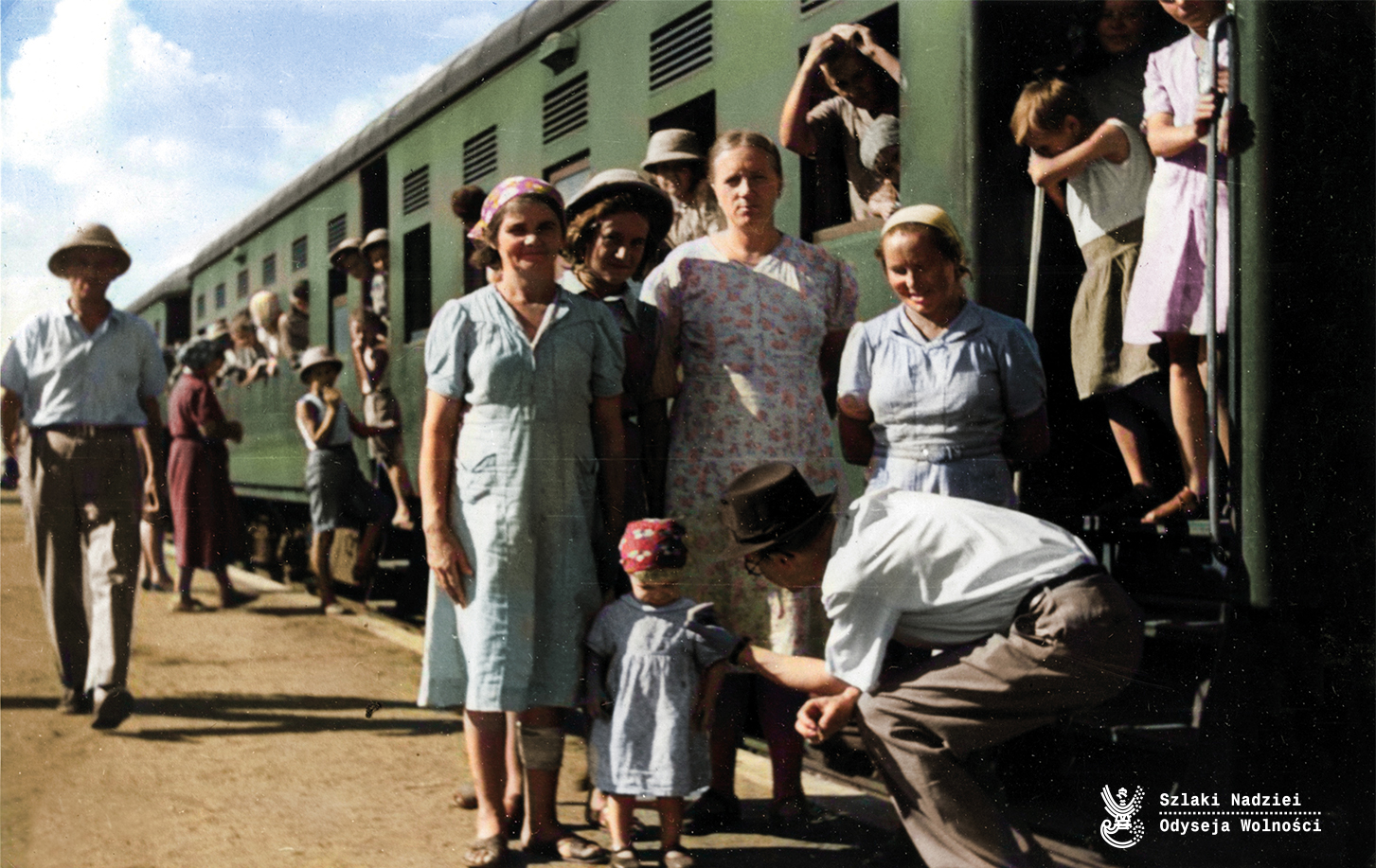
The transports of Poles evacuated from Iran to both Rhodesias first reached the port of Beira in Mozambique, before heading inland by rail. Polish refugees, a total of 2,500 people, arrived at Beira on 14 February 1943, 25 March and 9 April 1943. Later, the refugees reached Southern Rhodesia through the port in Durban.
The Rusape settlement had its own administration, and its English commandant was initially John Francis Bagshawe, with his duties being taken over by Captain J. R. A. Kelly from 1 September 1946. The position of head of the settlement on the Polish part was held successively by Edmund Zentkeller, Stanisław Tarnowicz, N. Lewandowska, Jan Olszewski, Karol Przednowek.
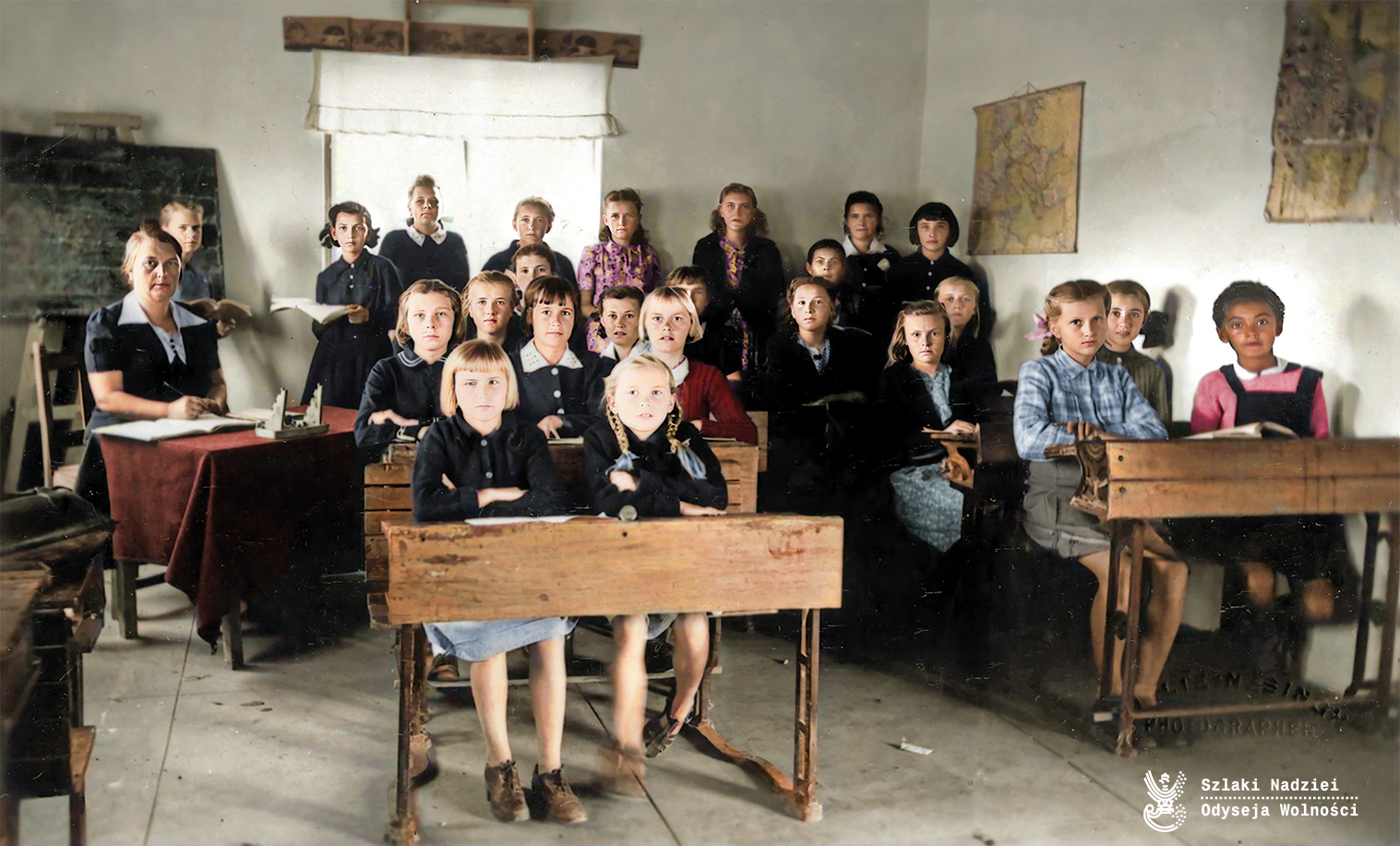
726 people ended up in the camp in Rusape, of which 295 were children and youths, 365 were women, and 66 men. Efforts were made in the camp to create the best possible living conditions for the refugees. Given the large number of children at the camp, they were given the opportunity to continue their schooling on lower-secondary education courses and in the Household Preparation School. The teaching staff was comprised of Poles who had previously lived in Cyprus. The refugees, inspired by Father Zygmunt Siemaszko, built a chapel in the camp dedicated to the Heart of Jesus.
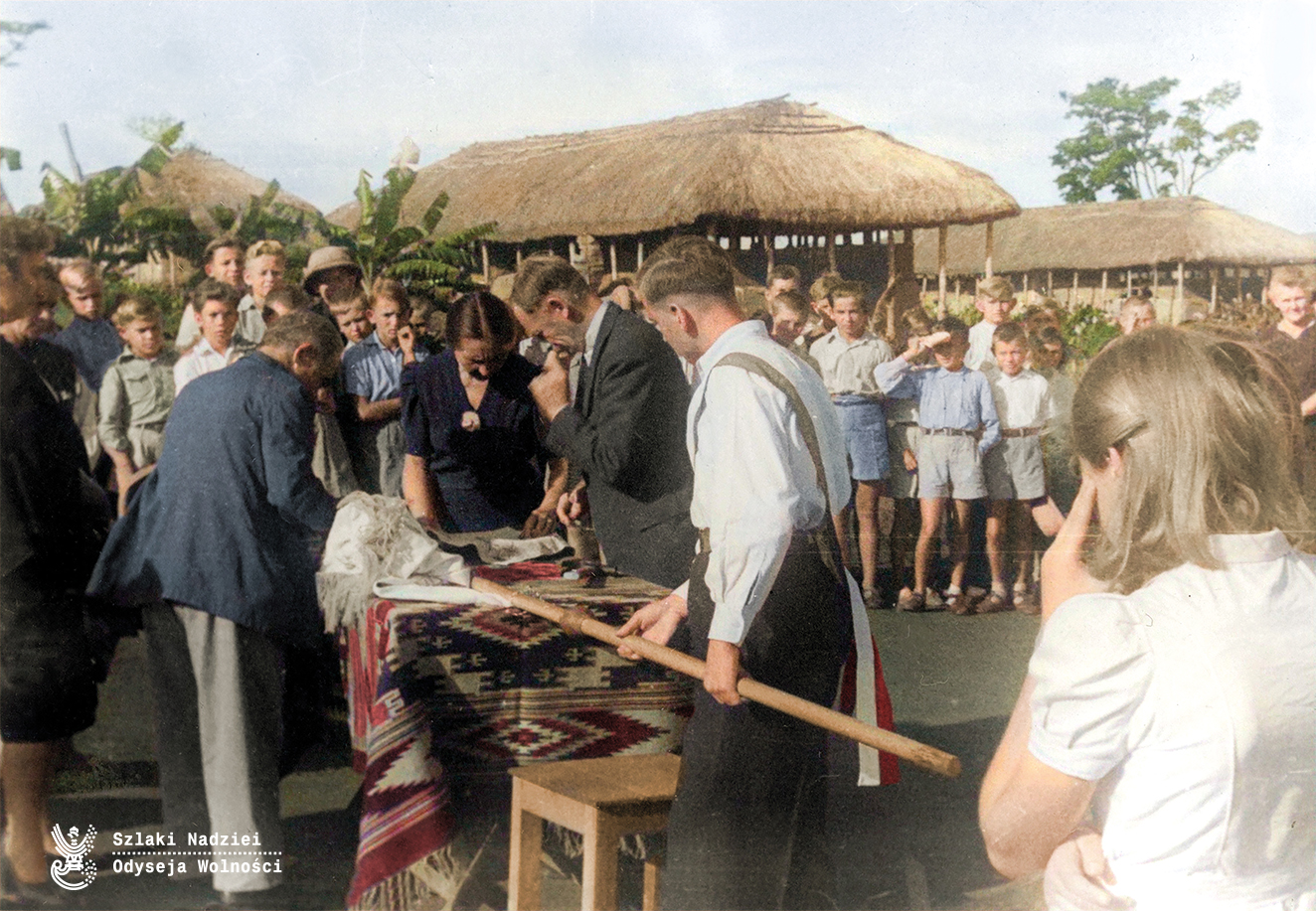
Cultural activities were also organised within the camp. The authorities decided that cultural work was particularly important under the specific conditions in which the refugees lived. This made it possible for the adults and youths to spend their free time in an interesting way, to recover from the trauma connected with their stay in the USSR. Cultural life was concentrated in the camp day room which offered access to books and newspapers. From 1943 onwards, the Poles could listen to Polish-language radio programmes broadcast by a radio station in Nairobi. The programmes were initially broadcast three times a week, but from early 1944 they were aired from Monday to Saturday.
The residents of the camp also had the opportunity to practice sports, and could use the sports field for team games and athletics. They played team games, mainly football, volleyball and basketball. Young people also had the opportunity to be active in the scouting organisation established in the settlement. There was also a café, a hospital and a sewing workshop. A library, a post office and an auditorium with a stage also functioned there. The settlement ran its own farm, which was used to grow vegetables and keep pigs, cattle and domestic fowl.
The Rusape settlement was liquidated at the end of 1946 and the residents were moved to the camp in Gatooma. The Polish cemetery that survived near the former Polish settlement is the burial place of a dozen or so Poles. In 2019, thanks to the efforts of the Centre for Documentation of Deportations, Expulsions and Resettlements at the Pedagogical University in Cracow, and of the Scouting Association of the Republic of Poland, the renovation of this cemetery began. The works were financed by the Institute of National Remembrance. The official opening of the renovated cemetery took place on 30 April 2022.