Brindisi is a city in southern Italy in the Apulia region. People had inhabited the area since the 16th century BC, the Romans called the city Brundisium, the Greeks referred to it as Brentèsion. Its importance grew with the expansion of the port and its connection to the rest of the Roman metropolis via the Via Appia
In modern times, the city boomed with the opening of the Suez Canal and the development of trade with the British colonies. During the Second World War, King Victor Emmanuel III came to the city in 1943 and it became the capital of Italy fighting on the side of the Allies.
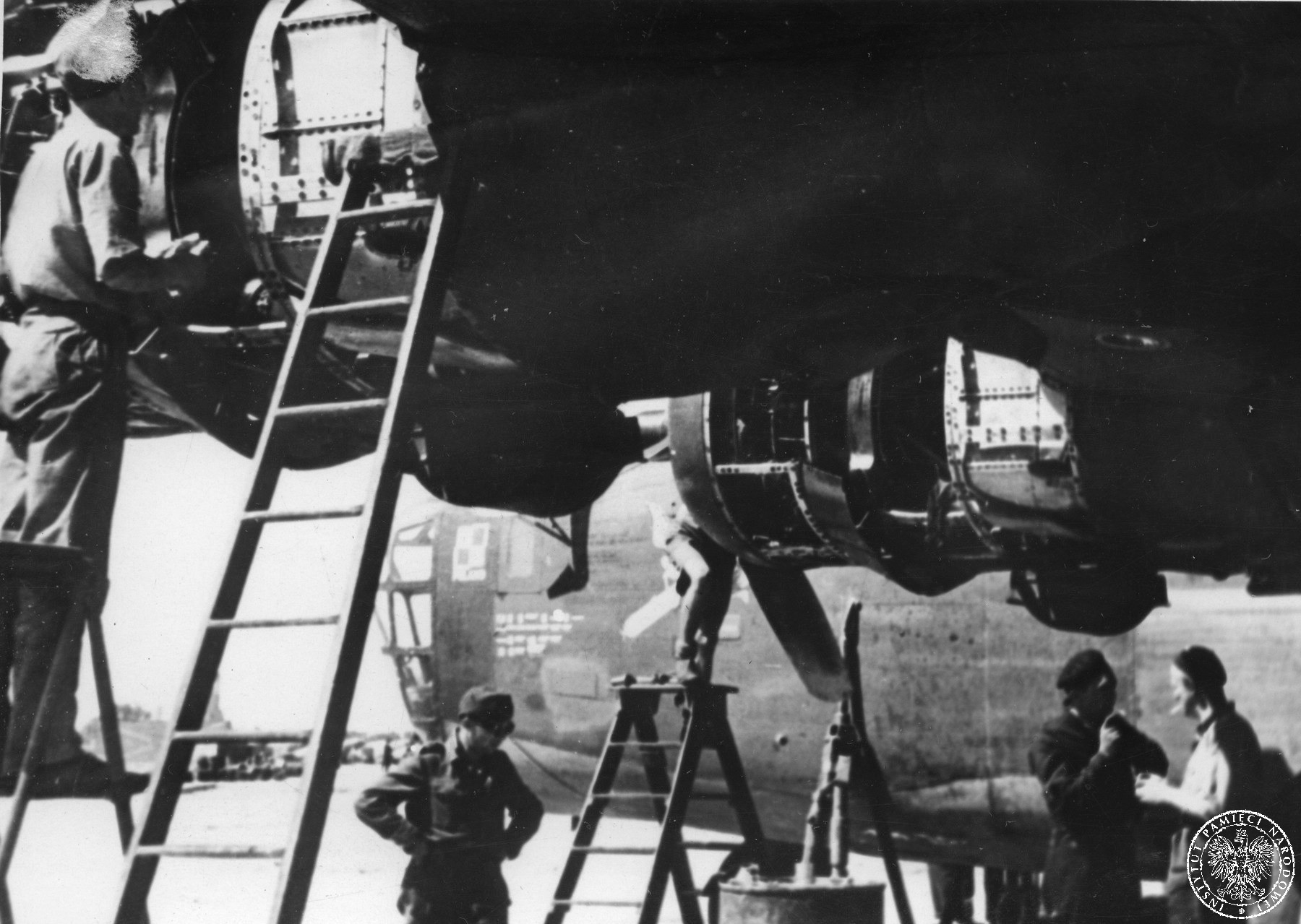
Polish troops appeared in Brindisi at the end of 1943. The British proposed to the Polish authorities to organise a base for the transfer of the Silent Unseen to Poland here. Up to this point, the Silent Unseen had departed from a base near London, which significantly extended the flight route.
The Polish Transfer Base was established by an order from the Special Branch of the Commander-in-Chief’s Staff on 25 October 1943, and was officially named the Polish Operations Section of Airborne Troops. On 22 December 1943, the first aircraft of No. 1586 Polish Special Duties Flight landed at Campo Casale airfield. Ground personnel arrived at the base on 12 November with 65 soldiers, including 11 officers and 54 NCOs and privates.
The Brindisi airport was referred to in official documentation as Base No. 11. It housed the Base management, warehouses, workshops and the jumpers’ briefing area. Base No. 10 was established in nearby Ostuni, where the Silent Unseen training and expedition centre was located. The “Capri” Base, responsible for organising courier communications to Poland and recruiting Poles in the Balkans for the Polish Army, was located near Brindisi. In Mesagne, 15 km from Brindisi, a Radio Liaison Branch was located, code-named “Zora”, “Mewa”, “Jutrzenka”, ensuring the base’s communication with the 6th Special Branch of the Commander-in-Chief’s Staff in London and the Home Army Headquarters and the Air Transfer Departments of the Home Army Districts.
The Poles quickly adapted to their new place of stationing and established contacts with the local population. Maciej Winiarski, one of the Polish soldiers stationed in San Vito near Brindisi, noted in his memoirs in 1943:
“Our relations with the local population were good or very good. As I found out later, we were as well-liked as the Americans, among whom there were many soldiers of Italian origin. The Italians, both the common people and the middle and upper classes, strongly disliked the English”.
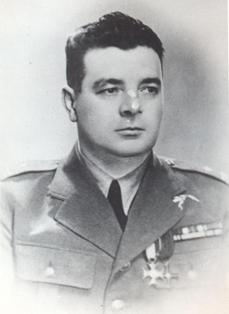
In January 1944, the position of commander of the Base was taken over by Major Jan Jaźwiński “Sopia”. From 29 August 1944, the entire Polish airdrop effort was commanded by Lt. Col. Malewicz-Dorotycz ps. “Ryszard Hańcza”, “Roch”.
Col. Leopold Okulicki was given the authority to recruit the Silent Unseen candidates in units of the 2nd Polish Corps in October 1943. They were to be sent for training on diversion courses and, on completion, dropped into occupied Poland. They were to form the Home Army command cadre there.
The Base organised a training centre housed in the buildings of an abandoned sanatorium. Colonel Leopold Okulicki “Kobra” became its commander. Instructors arrived from the UK, about 250 candidates arrived in Ostuni from Cairo in December 1943 and their training began from 3 January 1944. The trainees followed a training programme tried and tested by their predecessors in Britain.
The trainees practised the tactics of small group diversion and sabotage operations, and honed their skills with small arms and explosives. In order for the Silent Unseen to find their way around in the realities of occupied Poland, they were familiarised with the conditions of everyday life, the structure of the Home Army and the activities of the German occupation authorities.
As part of the debriefing course, which lasted between three and six weeks, the trainees created their false identity, the so-called “legend”. They were given civilian clothing, false documents and learned the details of their assumed identity. The degree of mastery of the “legend” was verified by the instructors questioning them.
The Silent Unseen flew to Poland 48 times from Brindisi airport. During the “Riposta” drop season, 34 flights were made, 23 of which resulted in a jump. The “Odwet” [Revenge] season ended with 14 flights, 7 of which resulted in a drop.
The outbreak of the Warsaw Uprising interrupted flights with the Silent Unseen. Polish crews from No. 1586 Flight, supported by Allied airmen from No. 148, 178 and 31 Squadrons made a number of supply flights. From 4 August to 14 September 1944, Polish crews carried out 97 airdrop flights for the fighting Warsaw, losing 16 planes which were shot down and 112 airmen that were killed. The operations of the Base ended in March 1945.
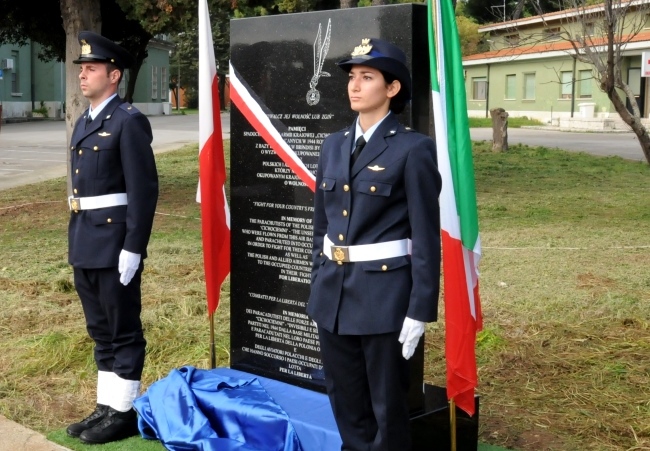
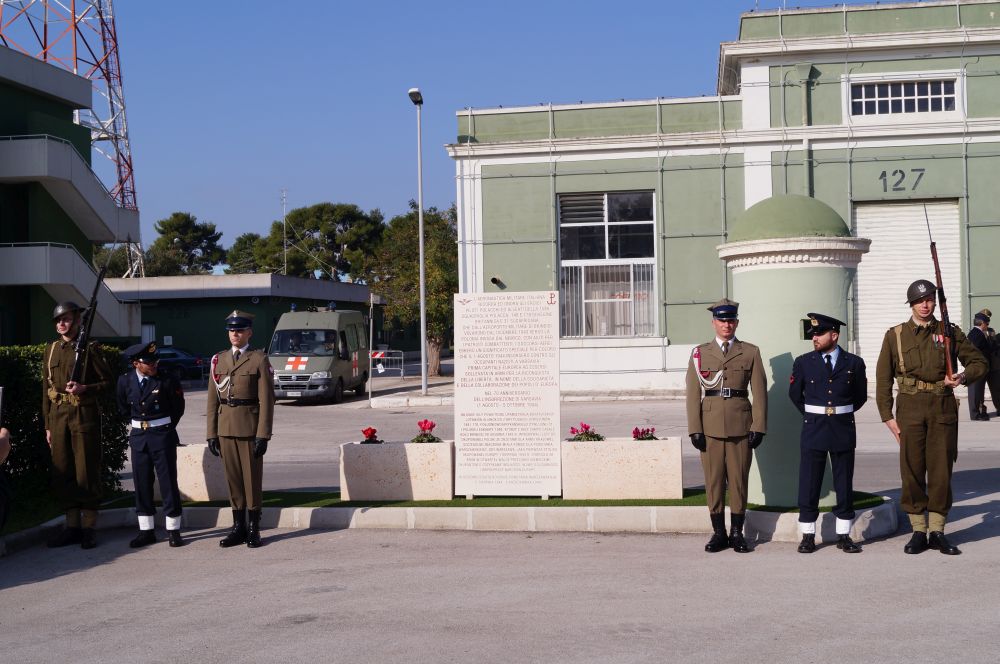
The service of Poles and Allied airmen was commemorated on 25 November 2014, when, on the initiative of the Italian Air Force, a commemorative plaque was unveiled on the Campo Casale air base in Brindisi. On 24 November 2016, a plaque dedicated to the Silent Unseen was unveiled in the vicinity of this commemoration. Two years later, on 28 March, a commemorative plaque was unveiled on the outer wall of Brindisi Airport in memory of the Polish pilots from No. 301 Polish Bomber Squadron “Land of Pomerania” aka “Defenders of Warsaw”, who died in Brindisi while returning from a mission on 6 January 1944.