Bologna is a city in northern Italy, the capital of the Emilia-Romagna region. Its origins date back to before the Roman Empire.
In the early Middle Ages, it was an important centre in the Exarchate of Ravenna. Later, in the Kingdom of the Lombards and, from 756, part of the Church State. During the Napoleonic Wars, it belonged first to the Cispadane Republic (as capital) and then to the Cisalpine Republic. In the years 1802-1805, it was in the Italian Republic, and between 1805 and 1815 in the Kingdom of Italy, before returning to the authority of the Popes. From 1860, in the United Italy.
During the Second World War, Bologna was on the route of the 2nd Polish Corps when Allied forces - in the spring of 1945 – attempted to advance further north and cut the Germans off from the crossings on the Po River. To do this, it was necessary to break through the local German defence points (including on the Senio River) and capture the town.
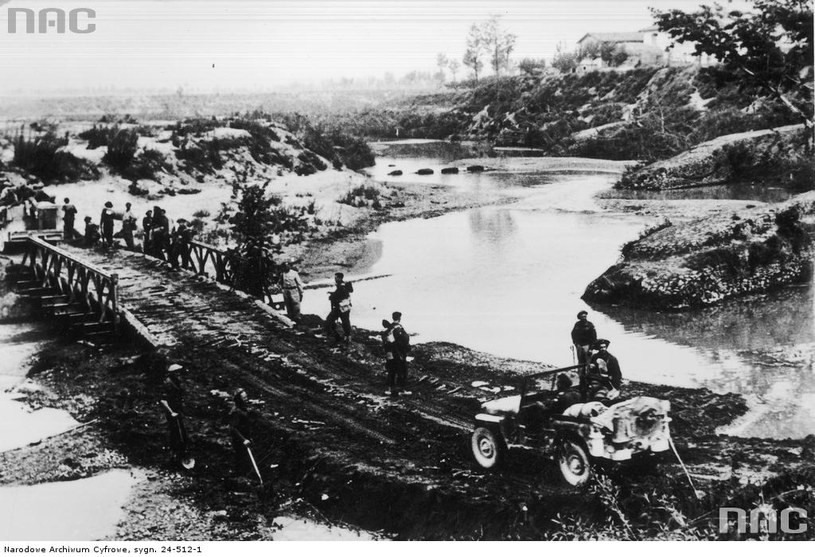
Initially, the 2nd Polish Corps conducted positional and reconnaissance battles. In March 1945, it moved to offensive operations to cut the retreat routes in the Ferrara-Bologna direction through a rapid assault, then cut off the main German forces by flanking them from the north. On 9 April 1945, the 3rd Carpathian Rifle Division began the forcing of the Senio. After breaking the defence line on this river and forcing their way across the Santerno River, the Poles captured more villages, forcing the Germans to retreat and embarking on typically pursuit activities.
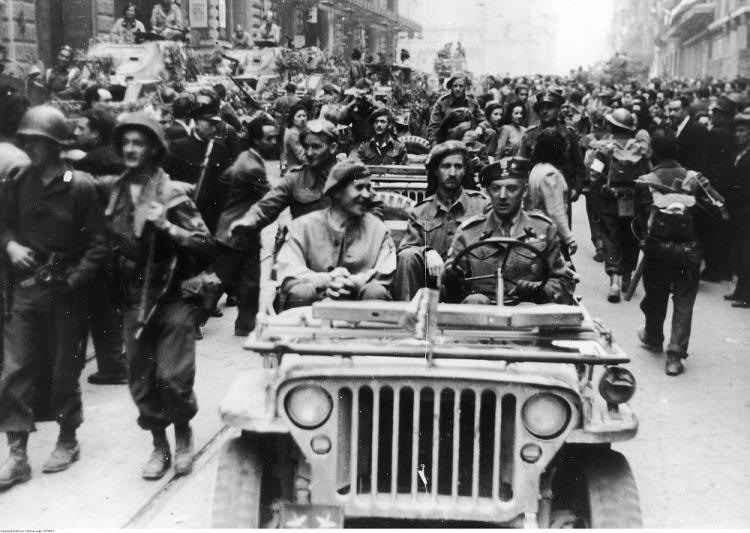
Advancing in parallel and performing support actions, the “Rud” group under the command of Col. Klemens Rudnicki (composed of: the 3rd Carpathian Rifle Brigade and 4th Volhynian Infantry Brigade) cut off German points located in the nearby mountains. Much of the activity took place around the important Imola - Bologna route. On 17 April 1945, the Poles captured Castel San Pietro, and after a few days crossed the Gaiana and Idice rivers. On 21 April 1945 at 6:05 a.m., the 9th Carpathian Rifle Battalion was the first to enter Bologna and hung the Polish flag over the city.
Polish troops entering Bologna were greeted with ovations by the local population and 17 commanders were given honorary citizenship of the city. Bologna councillors presented the Polish soldiers with special commemorative medals bearing the inscription:
Al liberatori che primi entrarono in Bologna 21 Aprile 1945 – per benem erenza
Polish losses suffered in the fighting amounted to between 600 and 1,600 wounded and between 200 and 300 dead soldiers.
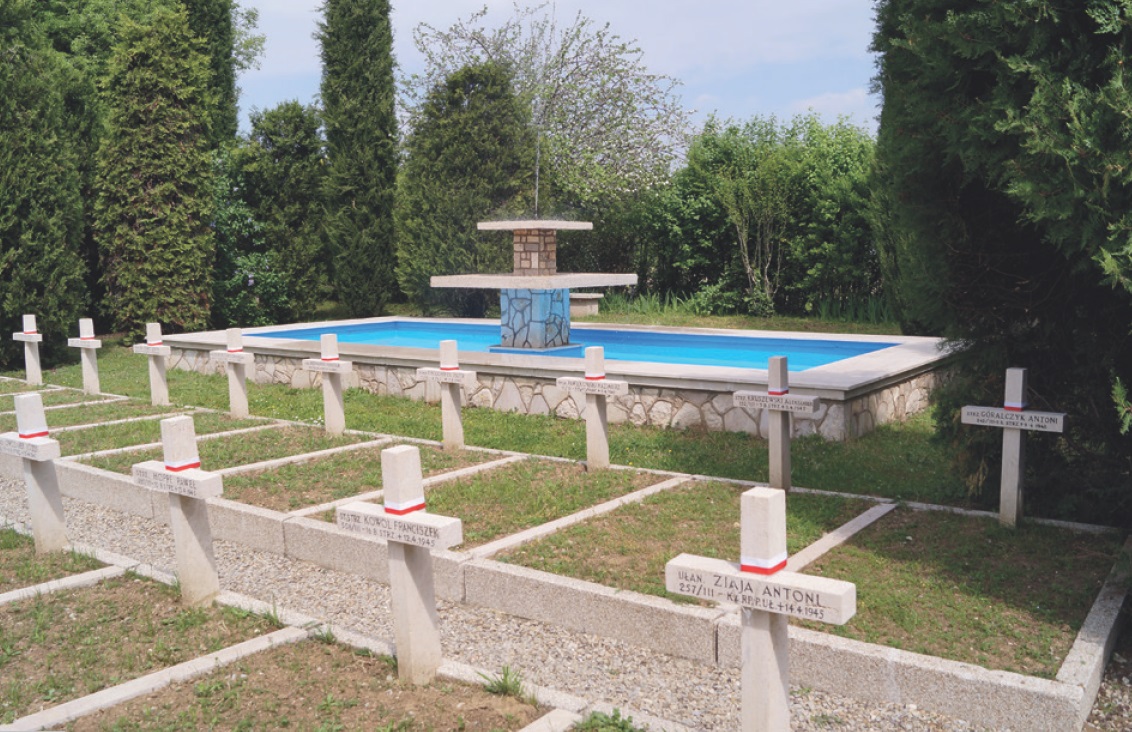
In the south of the city, on the main road, is the Polish War Cemetery in Bologna, the largest Polish necropolis of the four Polish cemeteries in Italy. The battles for Bologna were also commemorated by an inscription on one of the plaques on the Tomb of the Unknown Soldier in Warsaw.