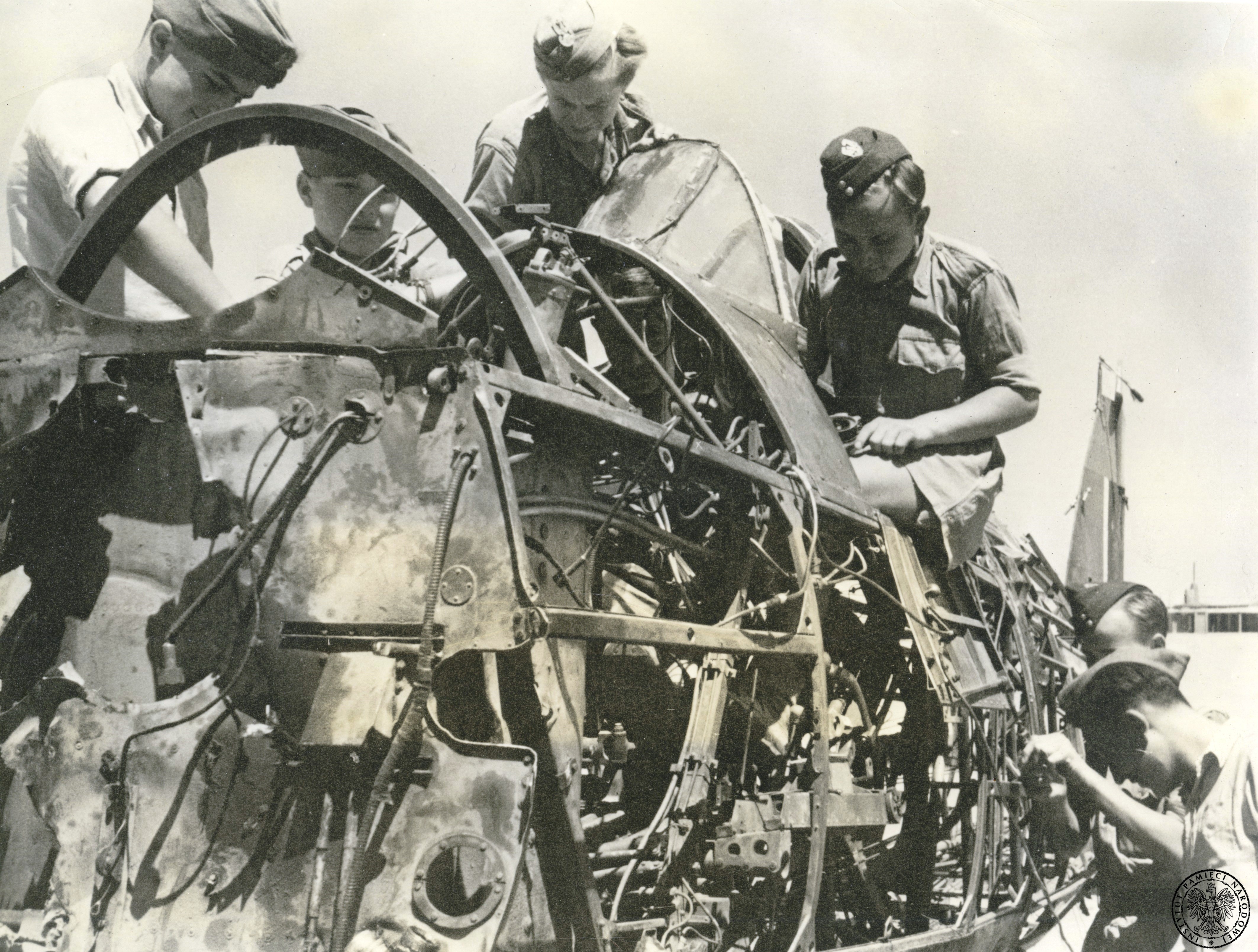
In 1942, units of young cadets (Polish: junaki) - older boys who were sent to the Young Cadet Military Schools - were formed as a part of the Polish Army in the Middle East. Indeed, there was a great demand for qualified mechanics, electricians, locksmiths or turners with experience in working with military equipment.
In the place where Polish troops were deployed, there was no space for studying or the necessary equipment to open proper schools. The Polish military authorities asked the British Army to provide access to one of the centres built for the Royal Electrical and Mechanical Engineers. Those were specialised centres with properly trained staff, where it was possible to carry out repairs for the military and also provide training for technical personnel. Based on the Rules of Organisation of the British Army, the units of Polish young cadets were considered part of the "Young Soldiers Battalion" and were assigned a REME base in Tel-el-Kebir.
In July 1942, a committee began its work, qualifying young cadets to study in specialities according to their predisposition. Those who showed technical ability were sent to the 1st Young Cadet School of Mechanical Engineering in Tel-el-Kebir. In September 1942, two hundred and ten young cadets began their training there. They were divided into four classes teaching history, arithmetic, Polish, English and religion. In December 1942, one hundred and twenty-three more young cadets were sent to the school, and the school was granted access to additional buildings and living tents. In May 1943, another group of one hundred and seventy-nine young cadets joined the school. As they completed their education, or reached conscription age, young cadets left school and were sent to serve in the Polish II Corps in Italy.
The goal of the first year of school was to remove any disparities in the education of the young cadets. Despite serious problems with textbooks and educational materials, which, thanks to the support of the British Army and the Poles serving in it, were overcome, the students went through the two-year curriculum material. They created English-Polish dictionaries of technical terms on their own. They also started to study various vocational specialities. In the created groups, the young cadets trained as gunsmiths, precision mechanics, blacksmiths, welders, electricians, chauffeurs and locksmiths. Classes were both theoretical – in the form of lectures, and practical – in workshops. Due to its military nature, the school also organised regular military classes covering the drill and weapon practice. The camp had student councils (cultural and educational, professional knowledge, sports and entertainment and hygiene and order) that organised day-to-day activities of the young cadets.
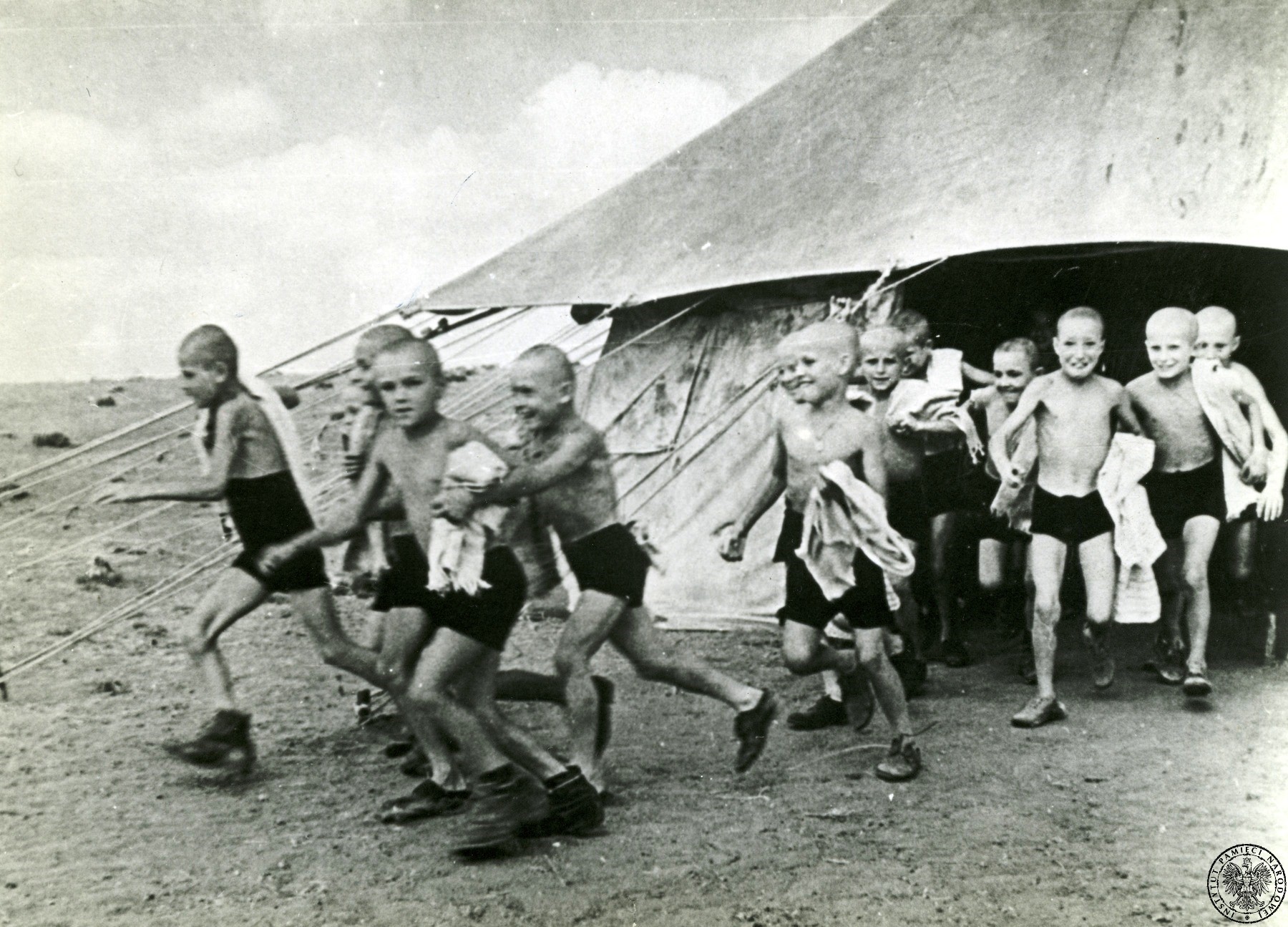
The school camp was located in the desert, but the young cadets set about developing the site right from the start. They built streets between buildings and tents, along which they planted shrubs and flowers. Various types of flowerbeds were arranged in open spaces. A camp chapel was built in one of the tents, which in time evolved into quite an impressive building.
The young cadets used their knowledge and available materials to build the camp's power station. They fenced off the camp area and built an entrance gate with a guardhouse. The young cadets divided the camp area into squares. An Academic Square was created with lecture rooms, a library, a physics and experiment room, and a Workshop Square with locksmith, blacksmith and battery workshops. The young cadets lived in the Residential Square with living tents, dining rooms, baths and common rooms. In 1944, the young cadets built the camp amphitheatre, where the school theatre, choir and a vocal and dance ensemble known as "Mazur" used to perform. To commemorate Tadeusz Kościuszko, the young cadets built a mound next to the camp, which they named after him.
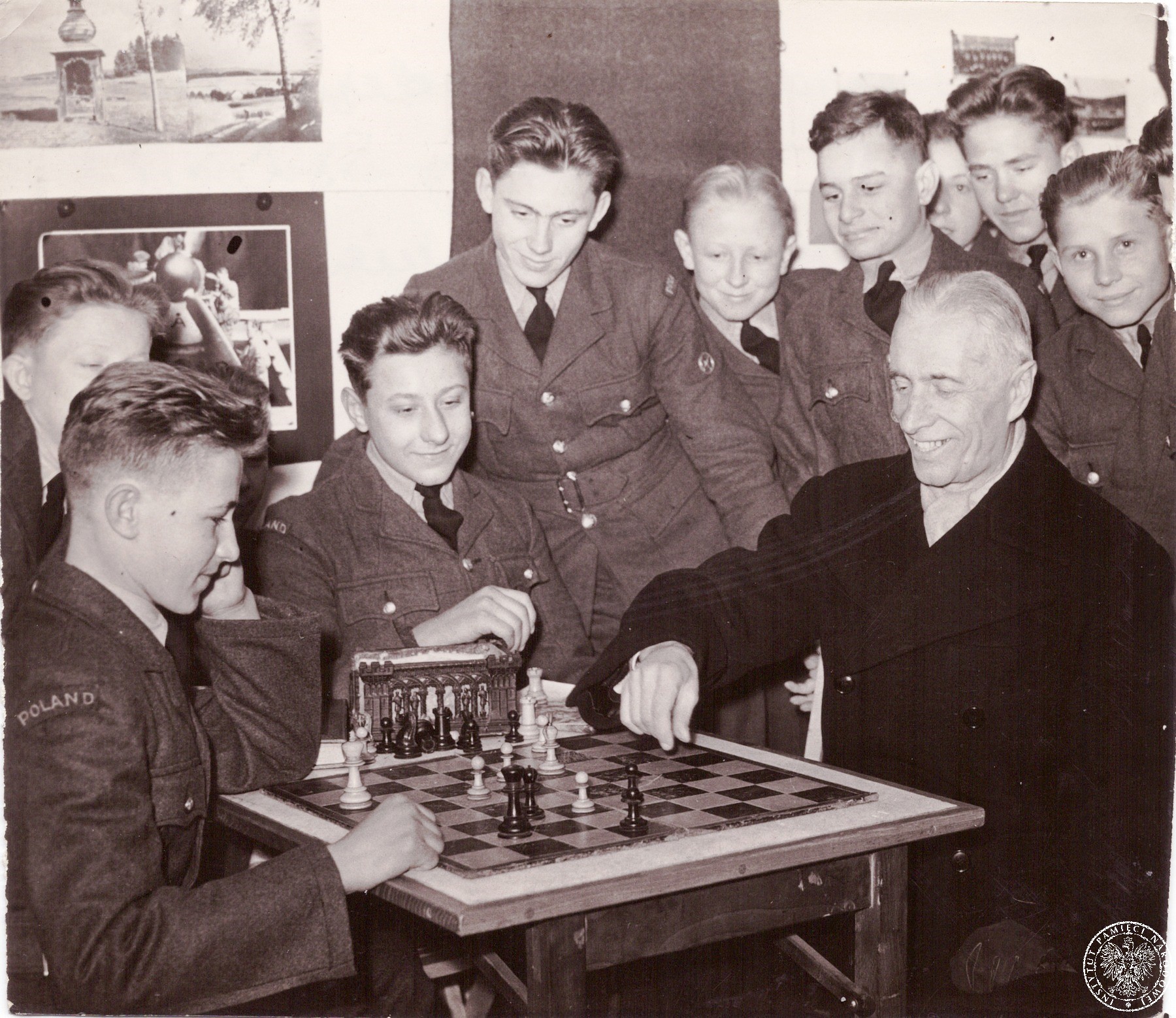
The young cadets celebrated Polish national holidays, i.e. 3 May and 11 November. Anniversaries were celebrated as well, such as that of the Battle of Warsaw or national uprisings. The participation of troops in full gear and a parade in front of invited guests were also part of the ceremonies. Between 1943 and 1945, the camp site was visited by a number of guests: General Władysław Sikorski, General Kazimierz Sosnkowski and General Władysław Anders, representatives of the Polish government-in-exile and the governments of friendly countries.
The young cadets spent their summer breaks at the Sidi Bishr holiday camp near Alexandria, which was made available to them. They had the opportunity to visit numerous Egyptian monuments and museums. As part of organised trips, they also had the chance to visit the Holy Land and go to the Dead Sea.
There were social and sporting organisations at the camp, as well as a scout troop which organised campfires, meetings, various talks and excursions. The Scouts used to publish their own magazine entitled "Na Tropie" (English: On the Track), which was very popular with the young cadets.
The young cadets could play team games, with football pitches as well as volleyball and basketball courts built for that very purpose. German and Italian POWs built two treadmills, three throwing areas, three jumps and an obstacle course for the young cadets. The British also provided necessary sports equipment. The camp football team used to play around 30 matches against various teams formed by Greek and French military units and public schools.
In June 1947, the school was relocated to the UK. It was ultimately closed in 1948.