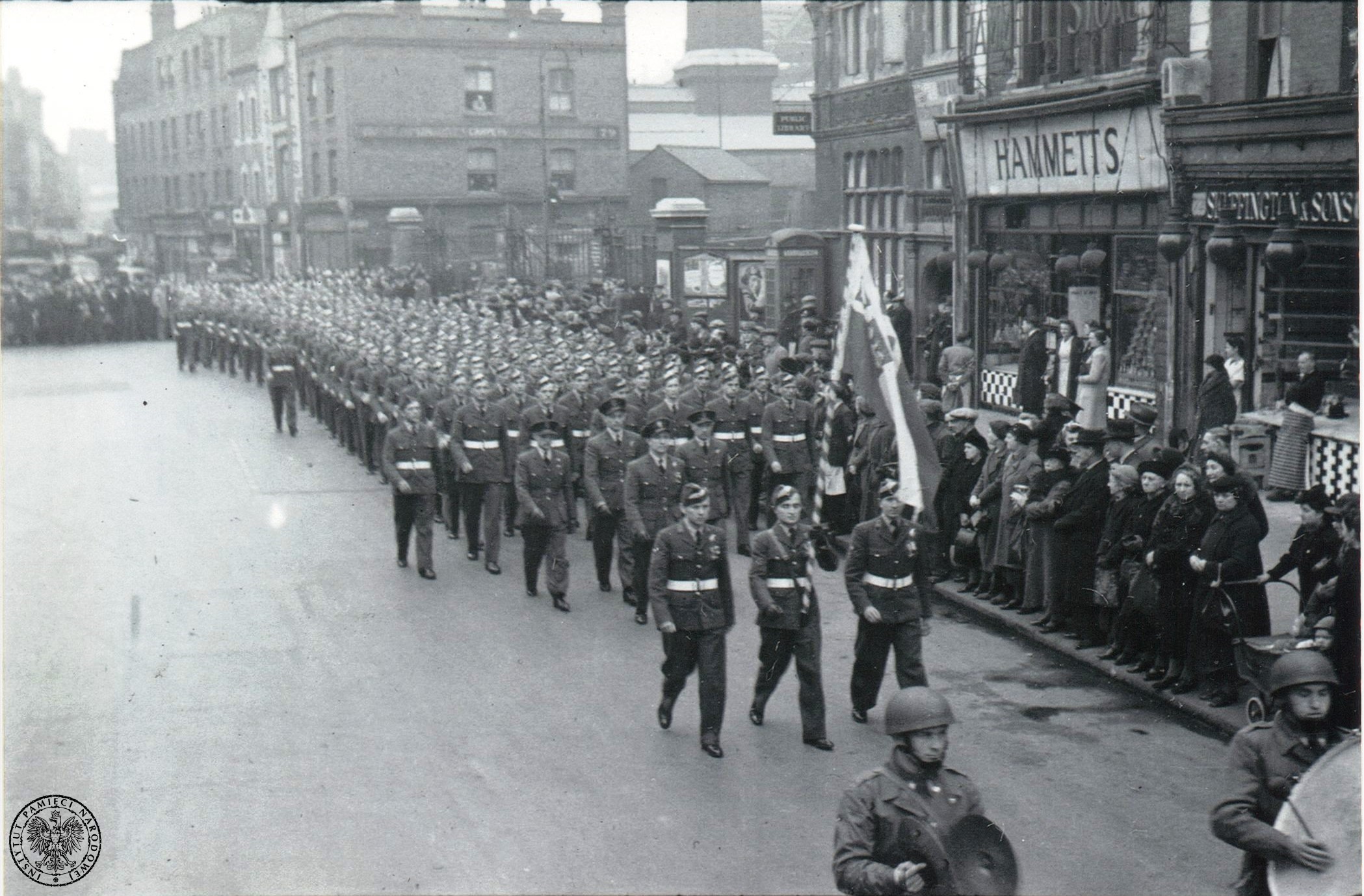

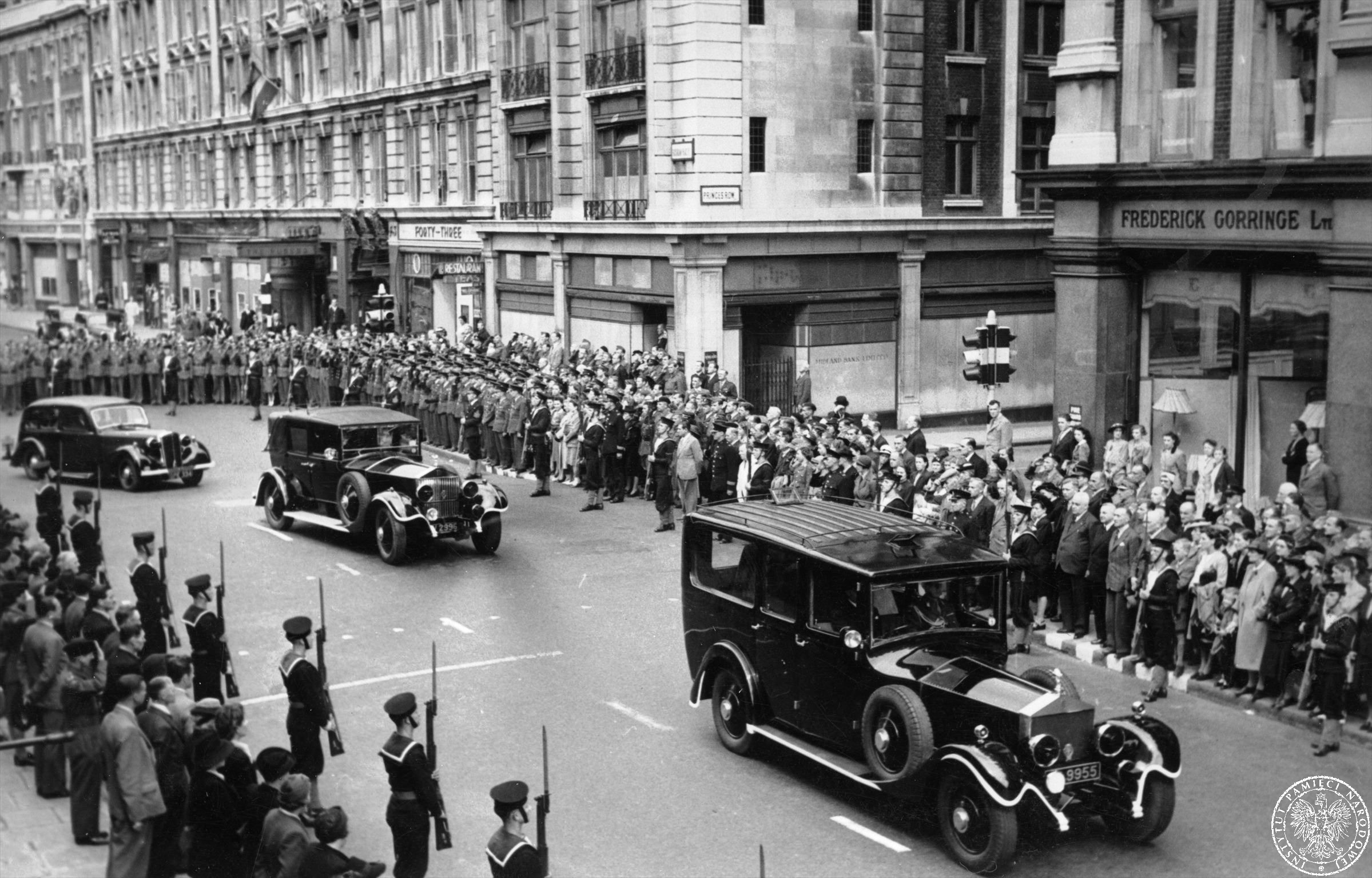
London is the capital of the United Kingdom and one of the most important and recognisable cities in the world. After the outbreak of war, it was the city of London that offered refuge to representatives of the countries attacked by the German and Soviet invaders. The Polish Government in exile was also seated here.
London became the centre of Polish political life in exile after the capitulation of France in June 1940. The Polish authorities in exile, residing in the territory of France since late September 1939, were invited to the UK by Prime Minister Winston Churchill. The preliminary conditions for the functioning of the Polish government within the territory of the United Kingdom were agreed upon with the British by General Władysław Sikorski, Prime Minister of Poland and Commander-in-Chief of the Polish armed forces.
To protect the British capital from the fate of Warsaw and Paris, Polish pilots flew in the air battle over England from August to September 1940. This way, they got a chance to take revenge on the Germans for the defeat in September 1939 . The Poles shot down one in seven aircraft of all the aircraft lost by the Luftwaffe in the battle. The pilots of No. 303 Fighter Squadron showed particular bravery. At the same time, in accordance with the Polish-British military agreement of 5 August 1940, the troops ready to intervene in the event of a German invasion of the island were formed in Scotland. The rebuilding of the Polish army on British soil was a difficult task, as the cadre could only be made up of those soldiers and officers who, numbering just over 25,000, had previously managed to make their way to the UK from defeated France. They ultimately formed Polish 1st Corps, which was later supplemented with the Poles, among others, who had been forcibly conscripted into the Wehrmacht and taken prisoner by the Allies. Units such as the 1st Armoured Division and the 1st Independent Rifle Brigade took part in battles on the Western Front, while others were being prepared for military action. Apart from the Polish 1st Corps, also the 1st Independent Parachute Brigade remained which, according to the plans, was to support a general armed uprising in Poland.
The authorities in exile were leading the Polish Underground State, operating in a country occupied by Germany and the Soviet Union. Thanks to the Government Delegation for Poland, the London government was able to maintain an administrative apparatus adapted to the conditions of war and occupation. Decisions on the military operations of the Home Army passed through London, including the one that green-lighted the Warsaw Uprising as part of the Operation Tempest in 1944. The Polish government in London was receiveing reports of German crimes against Jews. The Polish authorities informed public opinion worldwide about the extermination of the Jewish people. At the same time, through the delegation for Poland and diplomatic missions in neutral countries, they made independent efforts to save as many human lives as possible .
The Polish Government in exile pursued an independent diplomatic policy with the Western Allies. The new stage of that policy started out with the outbreak of war between the occupants of Polish lands. The need to negotiate with the Soviet Union, as an ally in the fight against Germany, meant a bitter compromise pushed for by the British authorities. The exile situation in London became even more complicated when, after the end of the war, the Western powers withdrew their recognition of the Polish Government. The longest official diplomatic relations were maintained with Ireland (until 1957), Spain (until 1968) and the Vatican (until 1972).
After the end of the war, the Polish authorities decided to keep state structures in London. The goal of fighting for Poland's independence still remained the same. Council of Polish Political Parties, which brought together representatives of most of the political forces active in exile.
After the end of hostilities, the Poles of the Polish II Corps also came to the British Isles from Italy and, like their colleagues from the Polish Armed Forces, they had an opportunity to join the Polish Resettlement Corps. The Corps was designed to prepare demobilised soldiers for civilian life and deploy them within or outside the UK. Eventually, it came to an end in 1949, and many Poles who did not choose to return to a communist-ruled country or to emigrate in other directions stayed in Britain.
Between 1940 and 1990, the Polish state was represented in London by 16 prime ministers (and the Executive of National Unity) and six presidents (and the Council of Three). There was also the National Council of the Republic of Poland, which, as a consultative and opinion-forming body of the President and the Government of the Republic of Poland in exile, was a substitute for a parliament composed of representatives of political groups, among others. The authorities of the Second Polish Republic in exile ceased their activities after Lech Wałęsa was sworn in as the President of the Third Polish Republic following a general election. During a ceremony at the Royal Castle in Warsaw on 24 December 1990, he was handed over presidential insignia, including those of the Order of the White Eagle and the Order of Polonia Restituta, by President Ryszard Kaczorowski.
A number of places of symbolic significance can be identified on the map of London. The residence of the President of the Republic of Poland, known as "The Castle", was first located in Bryanston Court at 56 Great Cumberland Place and then at 43 Eaton Place. The government was initially based at the Republic of Poland's embassy building at 47 Portland Place and later at Stratton House, 5 Stratton Street. In addition, some units were placed in the buildings of the Polish Catholic Mission at 4 Devonia Road. The Presidium of the Council of Ministers of the Republic of Poland was first located at 22 Beaumont Street and - from 1942 - it was moved to the Rothschild Palace at 18-19 Kensington Palace Garden. The Polish Commander-in-Chief's General Headquarters was based at the Rubens Hotel at 39 Buckingham Palace Road, while the Polish Ministry of Foreign Affairs carried out its operations at 70 Queen Gate. Another distinctive place on the map of "Polish" London is the oldest (established in 1947) Polish restaurant in the city: the Daquise, where representatives of different layers of the refugee community used to socialise. The building at 8 Lennox Gardens, on the other hand, although a private one, was often used of a professional space, as it was home to Edward Raczyński - Ambassador of the Republic of Poland in London (1934-1945), Minister of Foreign Affairs (1941-1943) and eventually President of the Republic of Poland in Exile (1979-1986).