“It is a matter of national honour for Hungary not to take part in any military action against Poland” - said Pál Teleki, a Hungarian politician, Minister of Education and twice Prime Minister of Hungary between 1920-1921 and 1939-1941.
Hungary’s position
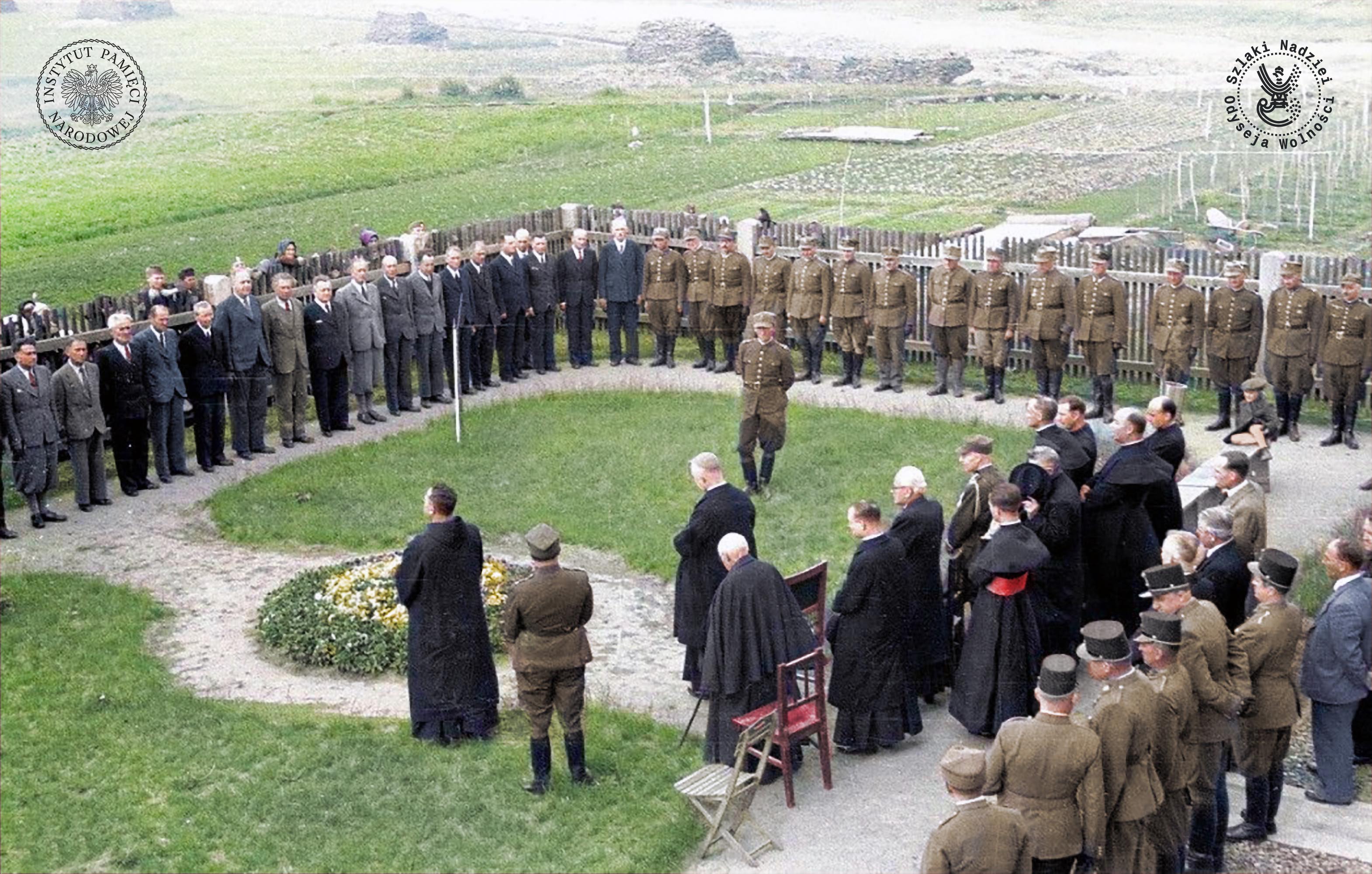
In 1939, the Hungarian government decided to open its borders to Polish refugees and provided them with all possible assistance. Polish schools and social organisations were active there until the Germans entered Hungary in 1944. Polish units, including the motorised 10th Cavalry Brigade of Colonel Stanisław Maczek and the 3rd Mountain Brigade of Colonel Jan Kotowicz, were given the opportunity to evacuate soldiers to France.
The 1939 refugees in Hungary included Generals: Kazimierz Sosnkowski and Stanisław Maczek, as well as Polish Deputy Foreign Minister Jan Szembek. The Hungarian government set up a special department under the Ministry of Defence to assist Polish military refugees. The directorate was headed by Colonel Zoltán Baló and later by Gen. Lóránd Utassy. Thanks to their actions and kindness, a large part of a group of more than 50,000 Polish soldiers made their way to France and the UK.
By the end of 1939, there were around half a thousand Polish doctors in Hungary. Most of them made their way to the West, including the IX Krakow Military Hospital with all its staff and equipment. After the occupation of Hungary by the Third Reich began in March 1944, General Utassy refused to hand over interned Polish soldiers to the Gestapo.
By the Danube
Until 1941, there was a Polish deputation in Hungary headed by Leon Orłowski, recognised by the authorities in Budapest. Its main task was to maintain contact with the occupied country. This was possible thanks to couriers who with great dedication crossed the border into the Carpathian Mountains. From December 1939, clandestine structures of the Polish Underground State, including the Military Intelligence and Liaison Base of the Union of Armed Struggle, and later the Home Army, operated in Hungary.
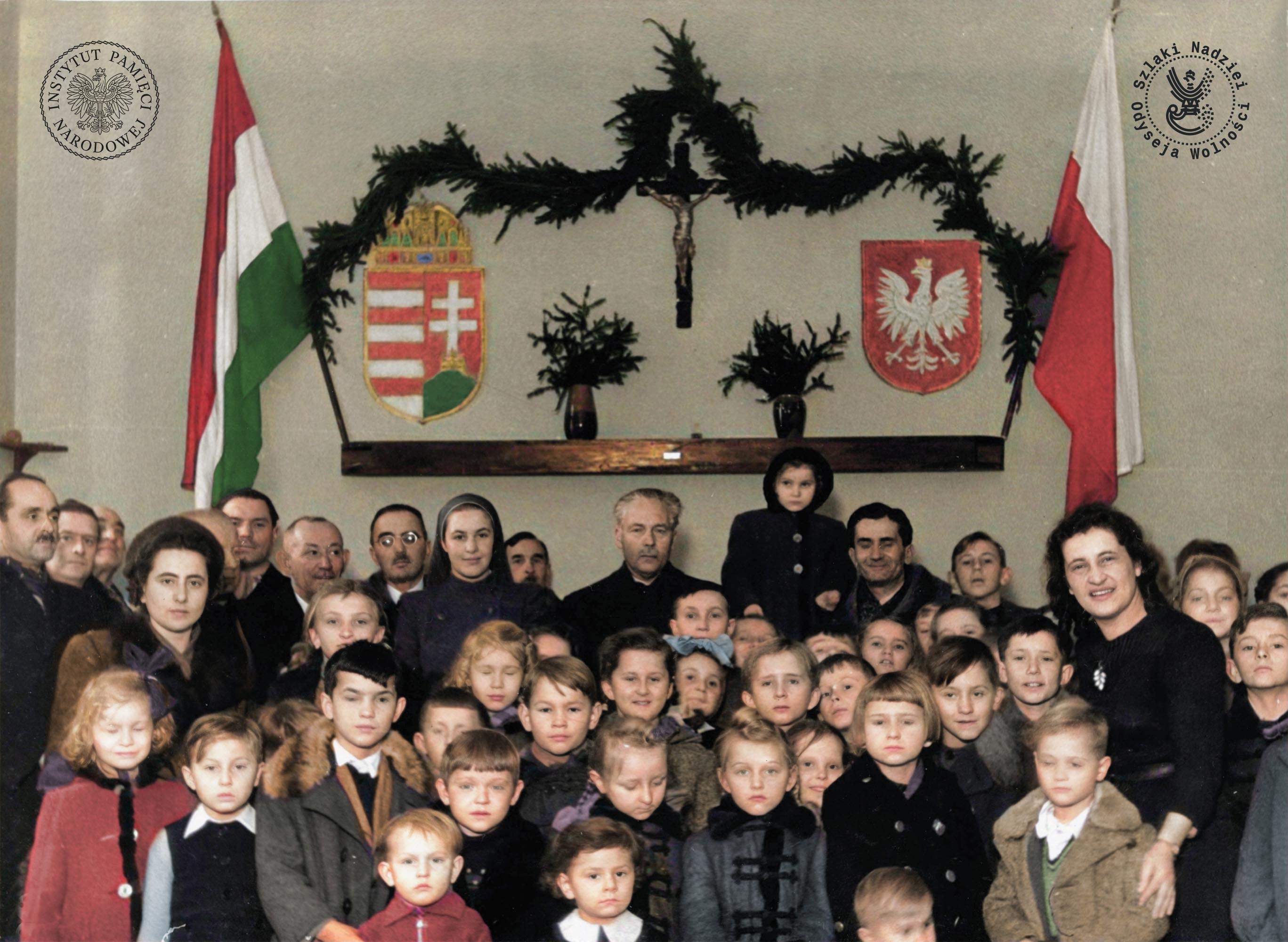
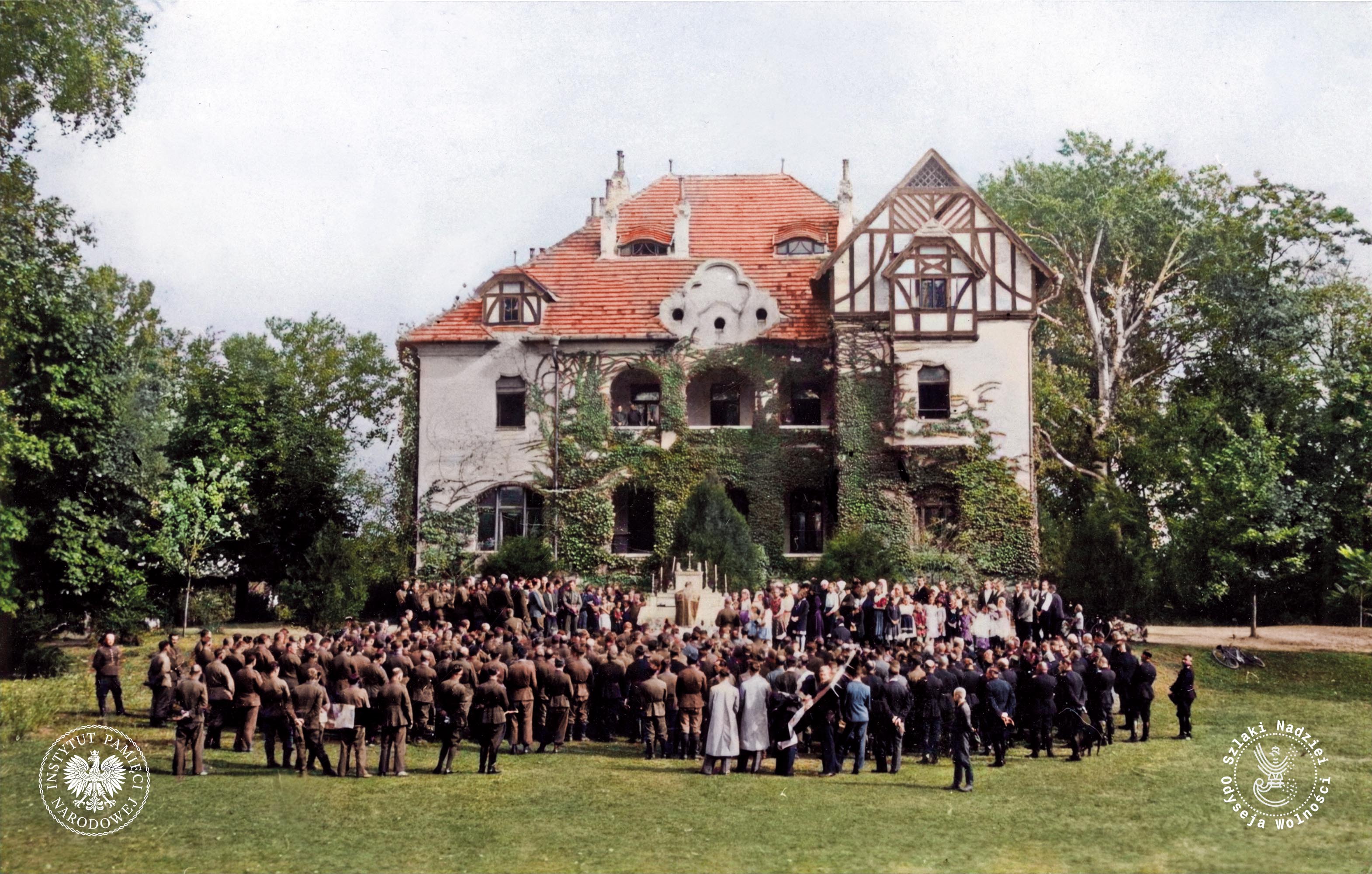
The school in Balatonboglár (initially in Balatonzamárdi), which operated from September 1940 until late autumn 1943, became an asylum for Polish children. Polish was the language of instruction, and after taking the final school leaving exam (matura), the pupils could continue studies at Hungarian universities. In 1943, a special centre was opened in Vác - a shelter for orphans (Lengyel Tiszti Árvák Otthona in Hungarian), where in reality Jewish children were hidden to protect them from being taken to the camps. The shelter was cared for by both Polish and Hungarian organisations.
Refuge
By mid-1944, there were approx. 8,500 refugees in Hungary. After the Soviet occupation of Hungary, the NKVD arrested Poles who had collaborated with the Polish government in London. After the war, most of the refugees returned to Poland. There were only a few Polish communities left on the Danube, the largest ones in Budapest and the mining towns of Tata and Tatabánya.
One of the Polish families that found refuge in Hungary was the Malczyk family. Karol Malczyk came from near Wadowice and was a talented painter. In 1939, he crossed the Polish-Hungarian border with his wife Milada and his brother Erazm (a Salesian). He settled in Zamárdi and taught drawing at the Polish Gymnasium for Refugees in Balatonboglár. Both brothers, especially Erazm, became involved in conspiratorial activities, which at the time focused on the transfer of soldiers and senior-year pupils to the Polish Armed Forces. At the last moment, warned by Hungarian friends, the Malczyks avoided arrest. Overnight, they moved to Mád, where Karol did polychrome work in the local Roman Catholic church.
When the war ended, they moved to Budapest. Erazm became a parish priest in a Polish parish in 1947. In 1949, they decided to move to Canada and later to the USA. Karol, in his subsequent paintings, thanked the Hungarians for taking care of the Poles during the war.